Dual Citizenship Legal Policy
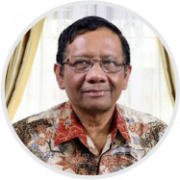
Author: Prof. Dr. Moh. Mahfud MD, SH, SU.
Lecturer at the Faculty of Law Universitas Islam Indonesia (FH UII), Department of Constitutional Law
It is wrong in their opinion to say that the legislative body that created Law No. 12 of 2006 concerning Citizenship has failed to form a law that is good and pro-progress. It is wrong for those who say that the creators of Law No. 12 of
2005 has failed to read and understand world development trends.
This needs to be clarified, because when the dual citizenship case of Arcandra Tahar, who had to step down from his ministerial post after only 20 days, emerged, many immediately accused the Citizenship Law of being the root cause. They claimed the law's creators were unaware of the world's ever-globalizing trends.
They also accused the drafters of Law No. 12 of 2006 of having a narrow-minded view because they established a legal policy for single citizenship.
They also said that nations in the world today have become global, many of which not only implement a dual citizenship system, but more than that, some implement multi-citizenship.
Arcandra's case serves as an example of how our Citizenship Law has closed the door on the best and most intelligent sons of our nation and country to serve. Arcandra, who is said to be a genius and sought after by foreign countries to apply his knowledge for progress, is actually being hindered by our citizenship law's policies from serving his homeland.
Those who believe the law's drafters failed to understand global development trends are wrong. In fact, the drafters of the Citizenship Law at the time had already comprehensively discussed the ins and outs of global development trends. At the time, I was a member of the Special Committee on the Citizenship Bill, chaired by Slamet Effendi Yusuf.
What I still remember is that besides me, there were other very active members, namely Murdaya Poo and Lukman Hakim Saifuddin, now the Minister of Religious Affairs. The government was also led directly by the then Minister of Law and Human Rights, Hamid Awaluddin. Before finally establishing the single citizenship system, the Special Committee had discussed the possibility of implementing dual or multi-citizenship.
However, ultimately, for the sake of Indonesia's sovereignty, whose natural resources must be utilized for the greatest prosperity of the people, a single citizenship system was implemented with limited tolerance for dual citizenship. What are the limitations?
For children born from mixed marriages between Indonesian parents and foreign citizens, as well as for Indonesian couples who give birth to children in countries that adhere to the ius soli system , the child is given tolerance to have two citizenships until the age of 18. The debate has dived into the question of alternatives between the principles of humanity and the principles of our nationality and democracy.
Based on the principle of humanity, we must treat all people on earth as citizens, including in Indonesia. However, based on the concept of nationhood and democracy, which is also fundamental in our constitution, we must regulate exclusively by prioritizing all policies, both citizenship and state leadership, for the greatest prosperity of the people and the interests of our nation.
Such a legal policy is considered more in line with our goal of establishing an independent Indonesia with its inherently exclusive spirit of nationalism. Therefore, in the relationship between the principles of humanity and nationality, we side with our own national interests without falling into chauvinism. It should be noted that our Citizenship Law was enacted as a consequence of the provisions of the 1945 Constitution, which were amended and strongly pro-human rights.
Article 28D paragraph (4) of the 1945 Constitution states that everyone has the right to citizenship status. Our Citizenship Law stipulates that, for the sake of humanity and human dignity, we must guarantee that every child born has citizenship. At the same time, tolerance is also regulated to approve dual citizenship for children who are born with dual citizenship by law, so that at some point they will have to choose one of them.
Children born in Indonesia to foreign parents under the jus soli system (citizenship acquired through place of birth, such as the US) will become stateless because Indonesia follows the jus sanguinis system (citizenship acquired through the citizenship of the parents). Therefore, the Indonesian Citizenship Law provides for automatic citizenship for them.
Conversely, if an Indonesian citizen gives birth to a child in a foreign country that adheres to the jus soli system, the child will have dual citizenship. Therefore, our Citizenship Law allows such a child to have dual citizenship until the age of 18. Foreigners are also permitted to become Indonesian citizens through naturalization.
Likewise, Indonesian citizens who have lost their citizenship are permitted to regain their citizenship status, but this must be done through naturalization. The President can even grant citizenship to those who are no longer WNT if they have rendered services or are truly needed in Indonesia. However, neither naturalization nor naturalization as a gift from the President can grant an Indonesian citizen citizenship.
The spirit of our citizenship law policy is to guarantee citizenship for everyone, while exclusively prioritizing the interests of our nation and people. Therefore, we adopted a single citizenship system with limited tolerance for dual citizenship. That was the translation of our nationalism into our citizenship law policy at that time.
If this kind of nationalism is now considered irrelevant and needs to be reformed, of course that can be done, because law is an agreement, or the result of every evolving situation and condition. But don't accuse the former lawmakers of failing to understand the current globalization trend. The former lawmakers discussed and understood it, but that was the result achieved at the time in interpreting our nationalism. If you want to create a new result, that's fine.
This article was published in the Sindo Newspaper, August 27, 2016.