Judging Must Be Patient
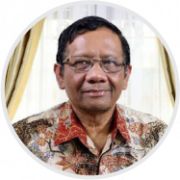
Author: Prof. Dr. Moh. Mahfud MD, SH, SU.
Lecturer at the Faculty of Law Universitas Islam Indonesia (FH UII), Department of Constitutional Law
The title of the article above arose from, and I intentionally linked, the issue of law enforcement in the case of Basuki Tjahaja Purnama, also known as Ahok, who is now a suspect in a blasphemy case. As is known, there is currently a growing clamor for Ahok's immediate arrest, two weeks after being declared a suspect. Some have even threatened to organize demonstrations larger than those of November 4, 2016 (411) if Ahok is not immediately arrested.
Ensuring the upholding of the law is indeed our obligation, especially if, due to circumstances, such as political manipulation, the law is difficult to enforce. However, we must remember that enforcing the law requires patience and avoidance of haste. Enforcing the law requires patience, following the process, which may take time, and caution to avoid mistakes that could lead to injustice. This applies to all cases, including the Ahok case, which is currently capturing our attention.
Judging by developments since the 411 demonstrations, the handling of Ahok's case has been quite swift, and the police's performance has been quite proportionate. When receiving the leaders of the 411 demonstrations, the government, led by Vice President Jusuf Kalla, promised that Ahok's case would be resolved within two weeks by the police. That promise has been kept; in fact, less than two weeks later, Ahok was named a suspect.
After naming Ahok a suspect, on Friday, November 25, 2016, the police transferred the case to the prosecutor's office for immediate trial. Despite the potentially stressful situation, the police have acted swiftly. Therefore, a larger demonstration than the 411 demonstration is no longer necessary, as it is irrelevant. Furthermore, the prosecutor's office has promised that Ahok's case will be submitted to the court within the next 14 days.
In legal practice, we must patiently follow the legal process itself, namely procedural law. We must not allow law enforcement officers to accuse and take someone to court due to external pressure. Because if we allow, let alone encourage, such methods, we too could become victims of such methods. If you are able to mobilize so many people to pressure the authorities to take someone to court, it is not impossible that someday someone will be able to mobilize and pressure the authorities to take you to court through what is commonly called criminalization.
That is the relevance of our call to be patient and careful in enforcing the law. However, law enforcement officials must not play around in their duty to uphold the law. They must not bow to political pressure from any direction in enforcing the law. Law enforcement officials must be agile and professional in handling cases. Law enforcement officials cannot manipulate the maxim "it is better to free a thousand guilty people than to convict one innocent person to protect one." The guilty, even if only one, must be sought and found.
Law enforcers should also not manipulate the religious principle that states, “Do not let your hatred for someone cause you to act unjustly.” Because this principle can be reversed using the method of mafhum mukhalafah to read, “Do not let your liking or fear of someone’s pressure cause you to act unjustly.” This is very important to emphasize because in reality, our legal system is often haunted by legal games between officials, politicians, and tycoons.
Legal malpractice by law enforcement officials is a common occurrence in Indonesia. This is evident in the numerous law enforcement officers—judges, prosecutors, police officers, lawyers, and even court administrators—who have been hauled off to court after being caught selling cases. Many believe their arrests were simply due to "bad luck," as many other sellers and buyers of cases are still on the loose and have not yet been apprehended.
Thus, patience in enforcing the law can be interpreted in at least two ways. First, we must patiently follow the steps in handling a case carefully and avoid injustice to those suspected of wrongdoing. Second, law enforcers must be professional and courageous in the face of pressure from any direction, whether from political leaders or those who possess bribes.
The apparatus must not be pressured by political forces from above and by bribery barons from the side. Officials must also not be forced by the power of the surrounding masses to impose their will. Officials must have the courage to reject, if necessary, fight, pressures that encourage them to act unprofessionally and unfairly. That is a form of patience that must be shown by the authorities in enforcing the law.
Lawmaking involves both creating and enforcing legal rules. Therefore, those who make legal rules must also be patient, meaning they must be diligent and careful, and resilient in resisting and resisting pressure, including bribes, that would lead them astray from the task of creating correct and sound legal rules.
This article was published in the SINDO newspaper, November 26, 2016.