
UII Faculty of Law Holds 8th International Student Colloquium (ISC)
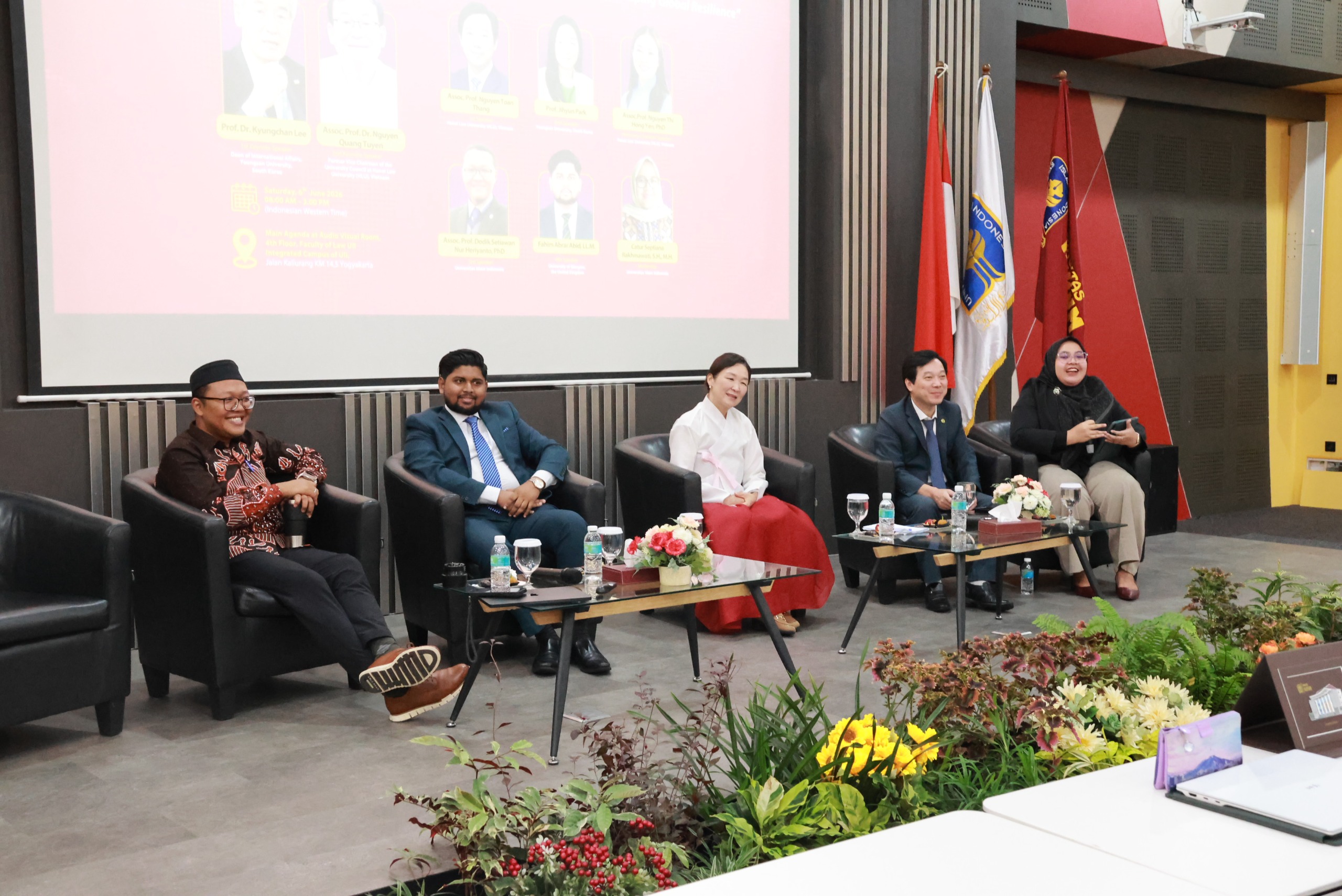
International Student Colloquium The 8th ISC this year was held today at the Faculty of Law Universitas Islam Indonesia, Yogyakarta, Indonesia. Speakers from Indonesia, Vietnam, and Scotland discussed the ever-relevant links between armed conflict, energy, and sustainable development.
The event began with remarks from the Rector of the UII Faculty of Law. This was followed by a dance performance by the Sanggar Terpidana student group from the UII Faculty of Law. The conference was attended by approximately 150 participants, including students and researchers from various countries. The conference's proceedings were published by the UII Faculty of Law.
The auditorium was filled with students, curious and enthusiastic about learning about current international issues. First, Professor Dr. Kyungchan, Dean of International Affairs at Youngsan University, South Korea, provided historical context regarding maritime security in Indonesia and globally. Dr. Kyungchan also discussed the ongoing energy paralysis caused by the US-Iran conflict.
Associate Professor Dr. Nguyen Quang Tuyen ( Hanoi Law University ) warned of the challenges facing the clean energy transition amid geopolitical instability. He stated that governments must ensure that laws do not reproduce local injustices when acquiring land for solar panels and wind turbines. He emphasized that the environment is always the first victim in global crises. This is evident in the current global regression towards non-renewable energy as the closure of the Strait of Hormuz continues to disrupt energy supplies.
Leading international law expert, Associate Professor Nguyen Toan Thang ( Hanoi Law University ), emphasized the urgency of comprehensive reforms to strengthen legal resilience in the face of crises. The Associate Professor stated that modern warfare could reverse years of progress in clean energy. The reform agenda includes changes to international humanitarian law, investment law, and the ASEAN Protocol.
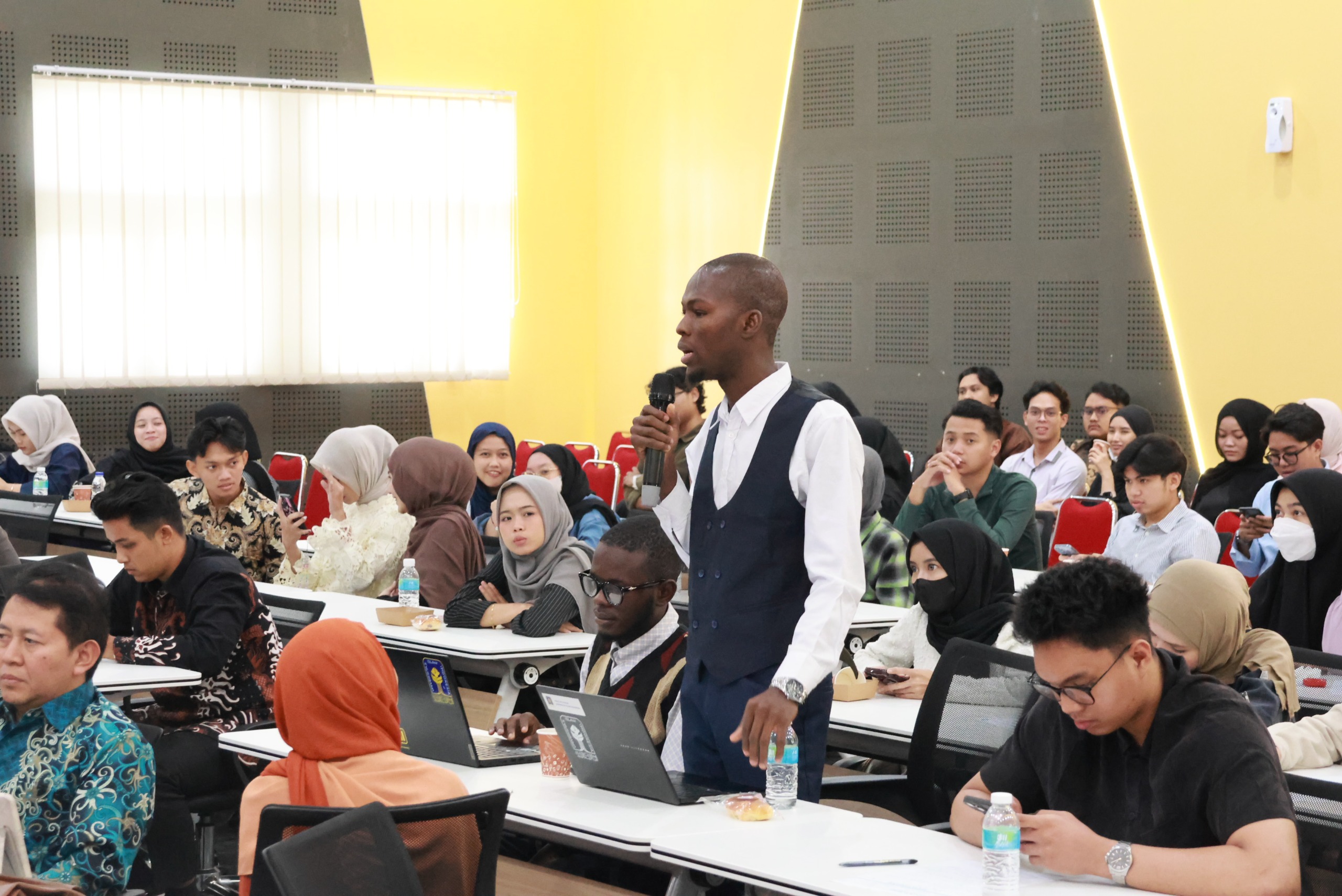
The students were shocked when Professor Jihyun Park (Youngsan University) stated that the official number of global wars according to the United Nations is 130, with 20 of them considered the most serious. The professor emphasized that there are significant gray areas in international humanitarian law, particularly regarding cyberwarfare. Reforms must address the increasingly inadequate legal framework, which was designed based on the parameters of 20th-century conflicts.
Associate Professor Dodik Setiawan Nur Heriyanto, PhD (Universitas Islam Indonesia) proposed a unique proposal for the creation of virtual embassies. This would significantly reduce costs and provide a starting point for improving relationships where mutual trust remains low. The associate professor acknowledged the challenges associated with cybersecurity but cited the 1979 US Embassy crisis in Tehran to illustrate that even physical embassies are not immune to risks.
Fahim Abrar Abid, LLM, of the University of Glasgow , introduced his research on proposed reforms to sustainable development governance. Mr. Abid called for countries in the Global South to be the architects of reforms as key stakeholders. He also argued that human rights principles should be more deeply integrated into legal frameworks, rather than simply being "a bit of aesthetic language tacked on."
While these global themes sometimes felt overwhelming and quite depressing, there was a palpable sense of optimism and engagement in the room. Students were encouraged to embrace their roles as future leaders and push for crucial reforms to improve legal resilience in times of crisis.



