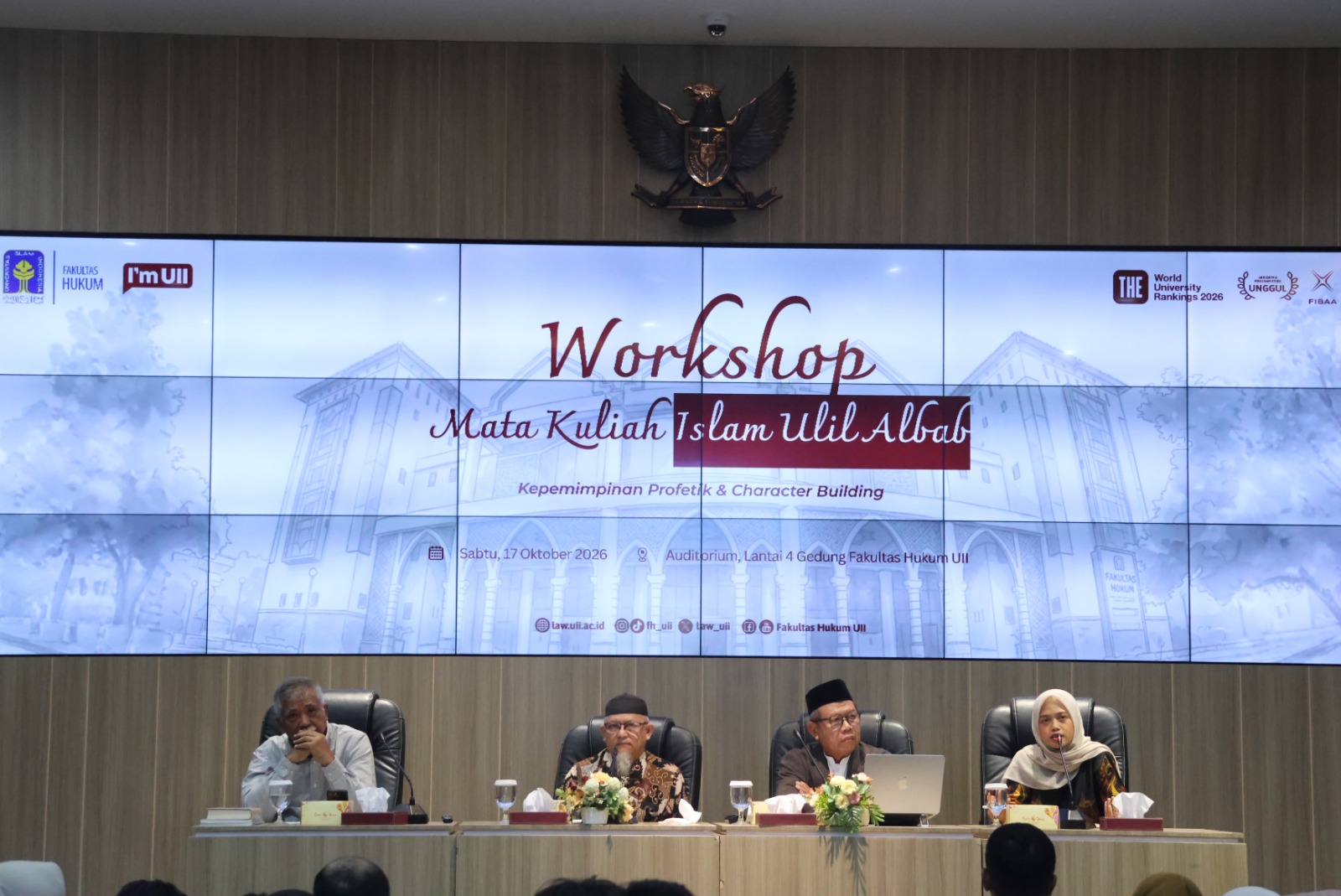
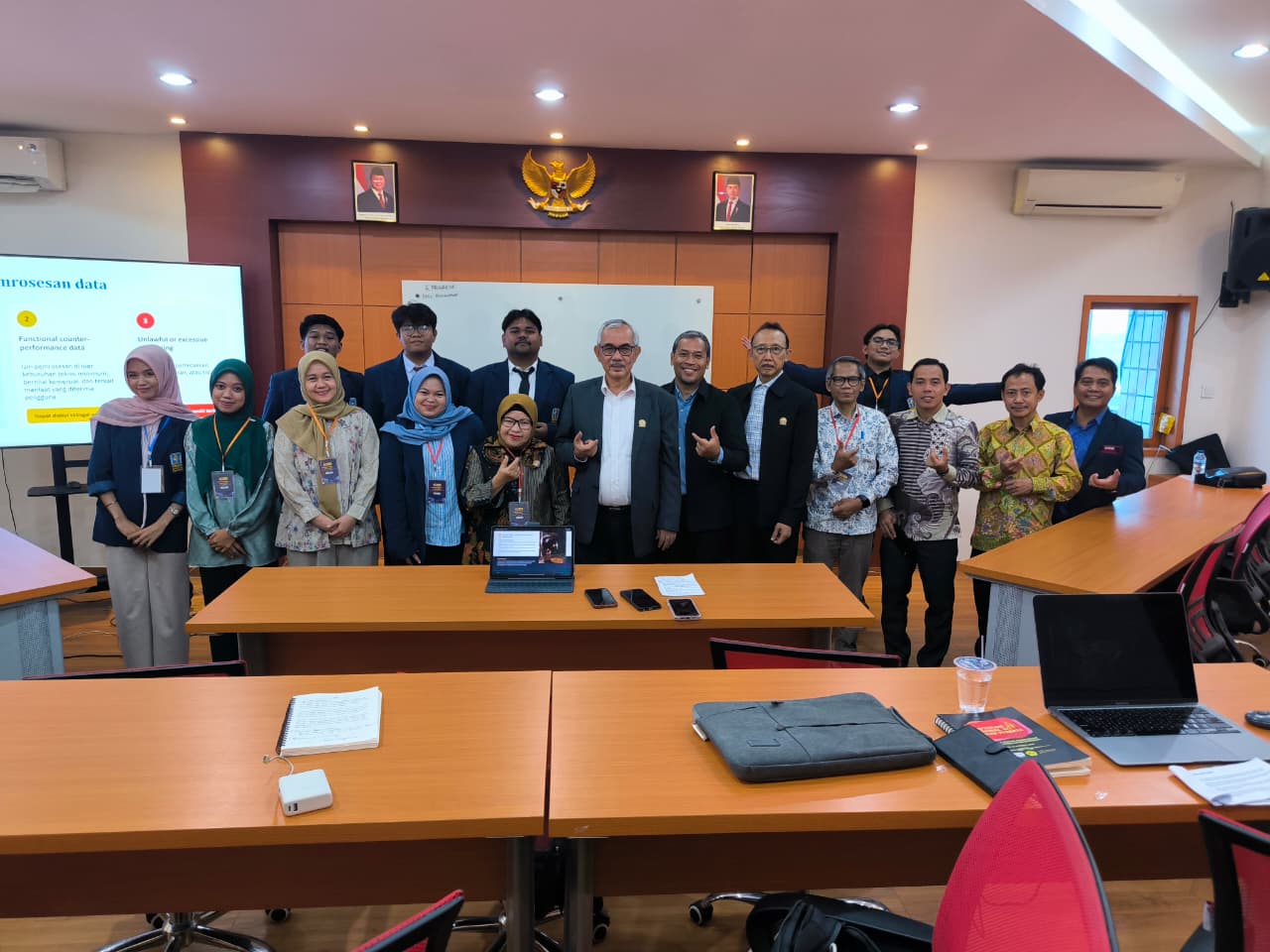
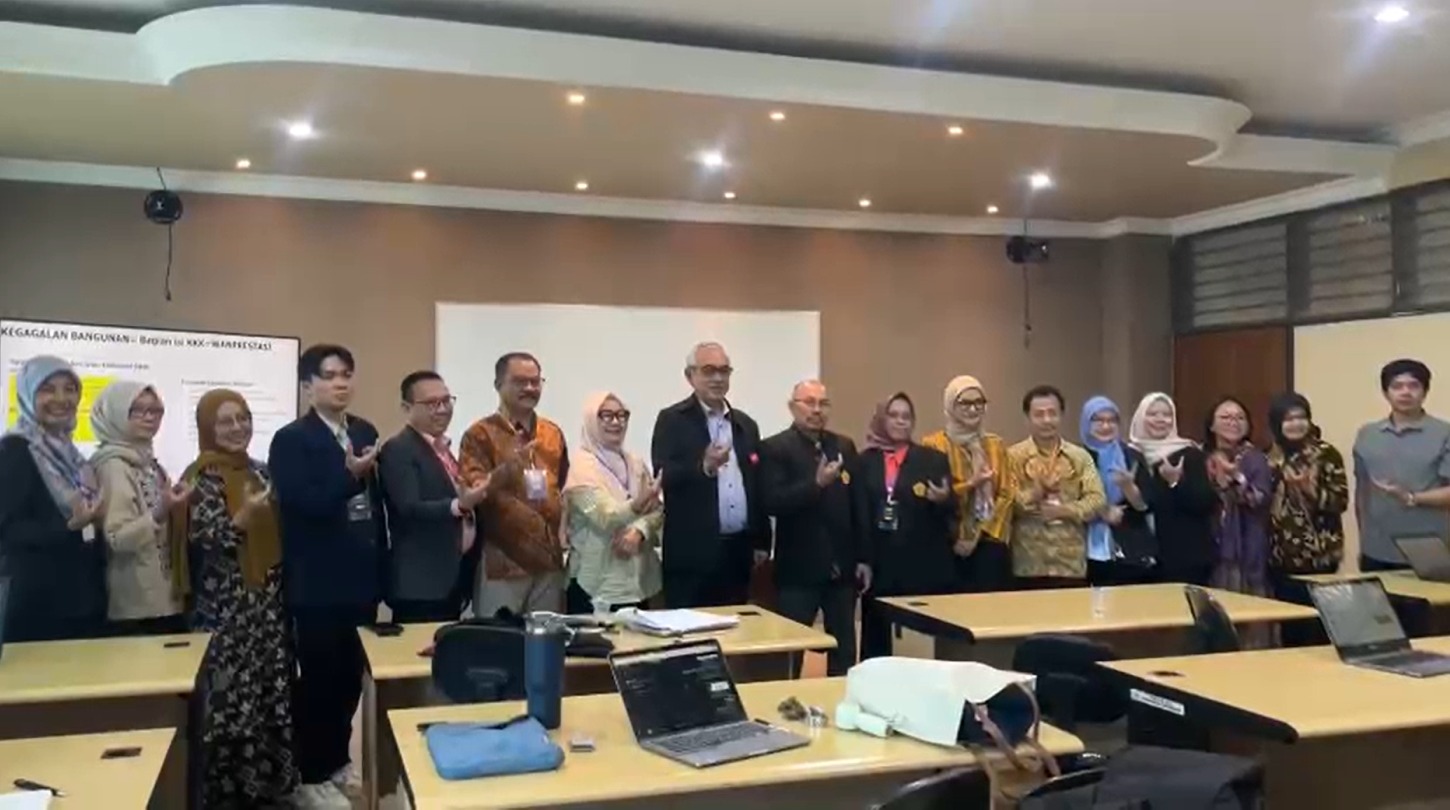
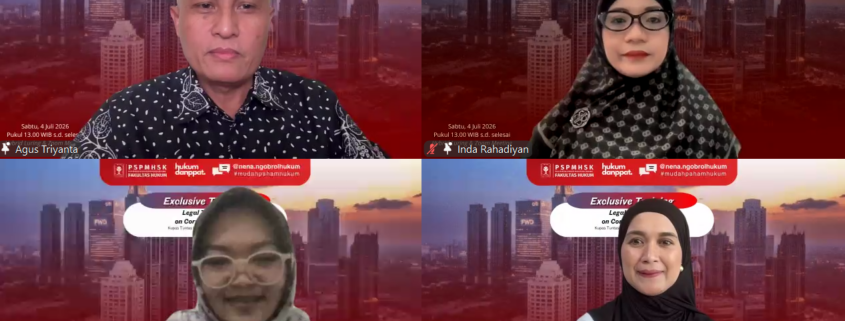
Yogyakarta — Faculty of Law Universitas Islam Indonesia (FH UII) held a Workshop and Character Building for the Ulul Albab Islamic Course on Saturday-Sunday, October 17-18, 2026. This activity was designed in two main agendas, namely a prophetic leadership workshop on the first day and activities outbound and character building on the second day. Through this series of activities, students are expected to develop not only intellectual and professional skills, but also integrity, resilience, concern for others, and the ability to make decisions oriented toward the common good.
The activity was attended by students of the Doctoral Program of Law Study, the Masters Program of Law Study, and the Masters Program of Notary Study of the Faculty of Law UII. Also present and giving remarks were the Dean of the Faculty of Law UII, Drs. Agus Triyanta, MA, MH, Ph.D., along with the heads of study programs, namely Prof. Dr. Ni'matul Huda, SH, M.Hum., Dr. Idul Rishan, SH, LL.M., and Dr. Ariyanto, SH, CN., MH. The presence of the heads of the faculty and study programs emphasized the importance of character building as an integral part of higher legal education.
Integrity and resilience are irreplaceable values
In his remarks, the Dean of the Faculty of Law at UII, Drs. Agus Triyanta, MA, MH, Ph.D., emphasized the importance of preparing students for changes in the workplace resulting from developments in digital technology and artificial intelligence (AI). He stated that as more jobs face the potential for automation, integrity and resilience remain crucial human qualities.
He reminded UII Law students that they must become individuals who uphold noble values. Integrity is not merely a moral identity, but rather a quality that makes someone trusted and needed in a professional environment. In this context, UII Law has a responsibility to ensure that education produces not only graduates with legal knowledge but also individuals with strong values and principles.
The Dean also emphasized that higher education should not be viewed solely as an institutional activity focused on financial gain. There are noble values and ideals that must be championed through education, including the development of individuals with integrity and social responsibility.
In addition to integrity, resilience is a crucial character trait that students need to develop. Facing change, pressure, and complex challenges requires resilience, adaptability, and a willingness to continuously learn. Through the Ulul Albab Islam course, these values are expected to be firmly ingrained, serving as valuable assets for students in their academic and professional lives.
The Dean also emphasized the tradition of freedom that is part of the UII Faculty of Law's identity. Freedom to express aspirations and opinions must be nurtured within a responsible academic environment. Students are expected to think critically, express ideas, and make their best contributions while upholding ethics and humanitarian values.
Enriching legal leadership perspectives
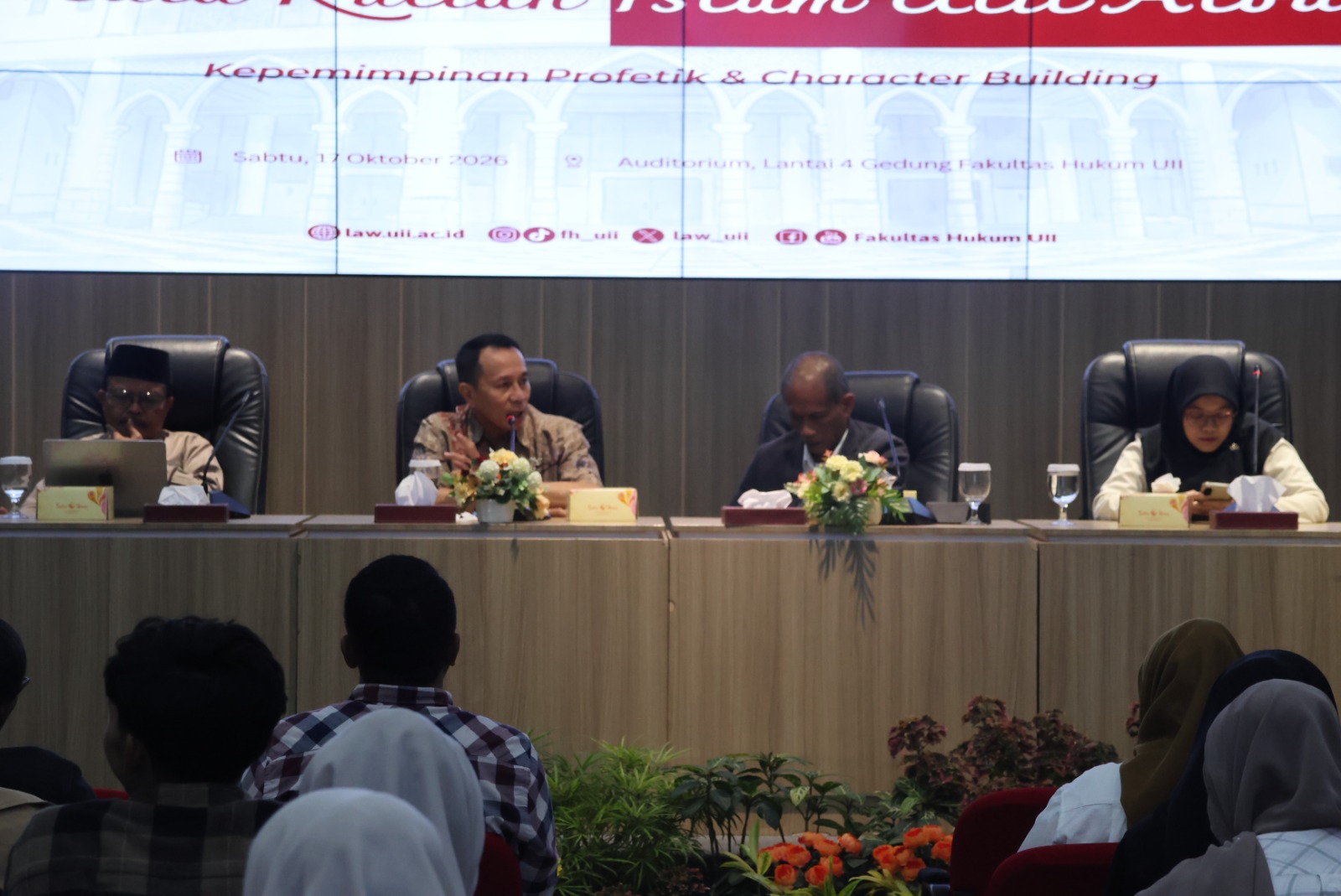
The workshop on the first day presented a number of academics and experts who discussed legal leadership from the perspectives of prophecy, humanity, nationality, technology, and ethics. Prof. Dr. Suparman Marzuki, SH, M.Si., through the material "Prophetic Legal Leadership", highlighted the importance of prophetic values as the foundation of leadership in the legal field. The values of siddiq (honesty), amanah (trustworthiness), tabligh (conveying the truth), and fathanah (intelligent and wise) serve as guidelines for developing legal leaders who are not only competent, but also have moral responsibility. Prof. Dr. rer. soc. Masduki, S.Ag., M.Si., discussed "Humanization, Liberation and Transcendence in Leadership". This material emphasized that leadership needs to be directed to glorify human dignity, free society from injustice, and be based on spiritual and moral values. Good leadership is not only measured by success in achieving targets, but also by its impact on humans and the social environment. Dr. Drs. Asmuni, MA, through his presentation on "Islam, Leadership, and Nationality," connected Islamic values with national responsibility. Legal leadership must be able to reconcile religious values, Pancasila, the constitution, and the principles of the rule of law in an effort to achieve justice and the public good. Thus, Islamic identity and national commitment can strengthen each other in professional life.
In the next session, Dr. Yudi Prayudi, S.Si., M.Kom., discussed “Leadership in the AI Era: Technology Development, Maintaining Values, and Building Civilization.” This material highlighted the changing role of AI from a mere tool to a technology that influences the decision-making process. AI can assist legal work and increase efficiency, but it does not eliminate human responsibility for decisions and their impacts. Leaders must continue to check the accuracy of information, maintain data confidentiality, anticipate bias, and ensure technology is used fairly and responsibly. Dr. Suwarsono Muhammad, MA, delivered the material “Humanization of Law and Just Leadership.” This discussion reminded us that law is essentially intended for humans. Therefore, the application of law and leadership must consider human dignity, social conditions, and protection of vulnerable groups. Law should not stop at formal compliance with rules, but must also bring justice in real life. Meanwhile, Prof. Dr. M. Syamsudin, SH, MH, in his presentation "Islamic (Prophetic) Legal Ethics and Public Interest," explained the concept of public interest as a crucial orientation in establishing and implementing law. Public interest is related to efforts to bring about goodness while preventing harm. From a prophetic legal perspective, the principles of humanization, liberation, and transcendence serve as the foundation for protecting human dignity, reducing injustice, and ensuring that legal implementation is grounded in moral values and responsibility to Allah SWT.
From insight to leadership practice
This series of materials demonstrates that future legal leadership requires a combination of scientific mastery, managerial skills, integrity, and social sensitivity. Mastery of technology must go hand in hand with the ability to assess risks and their impacts. Likewise, authority within the legal profession must be exercised with integrity, fairness, and a focus on the public interest.
The second day's activities continued with outbound activities and the Prophetic Leadership Challenge . Through experiential learning, participants were encouraged to develop teamwork, communication, problem-solving, decision-making, and challenge-solving skills. This approach complemented the conceptual learning on the first day with hands-on experiences that could be applied to their academic and professional lives.
As part of character building, students are also guided to formulate a personal commitment to implementing prophetic leadership values. This commitment is expected to serve as a reminder that the values of honesty, trustworthiness, intelligence, responsibility, and caring are not confined to lectures but are embodied in daily actions.
Through the Ulul Albab Islamic Character Building Workshop and Program, the Faculty of Law (FH) of the University of Indonesia (UII) affirmed its commitment to producing law graduates who are not only intellectually superior but also possess integrity, humanity, adaptability, resilience, and a focus on the common good. These values are expected to serve as a foundation for students in navigating the digital transformation and contributing to building a more just legal and societal life.



 Faculty of Law Universitas Islam Indonesia
 Faculty of Law Universitas Islam Indonesia