
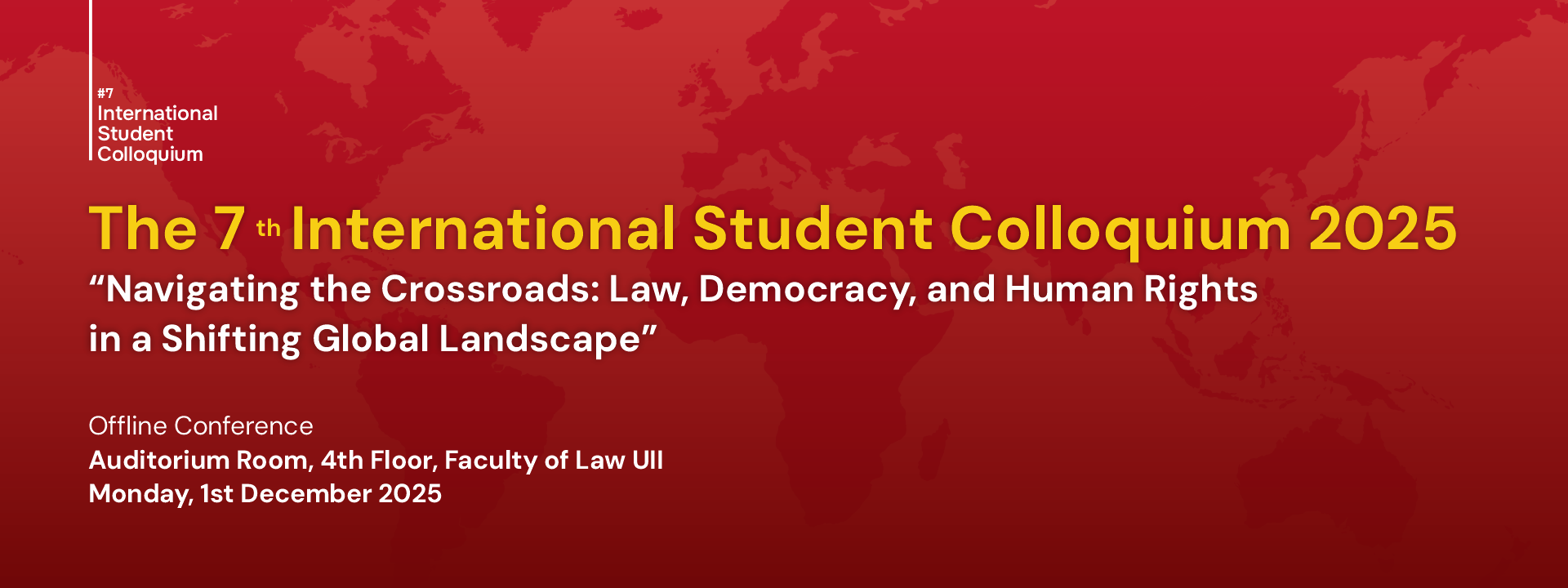
“A global conference exploring how law, democracy, and human rights confront digital transformation, rising authoritarianism, civic activism, and shifting geopolitical dynamics in today’s evolving world.”
Event Details
International Student Colloquium 2025
Background
The dawn of the 21st century has been marked by an intricate interplay of globalization, rapid technological advancements, and a re-evaluation of established political and legal orders. While the post-Cold War era heralded an optimistic wave of democratization and the universalization of human rights norms, contemporary global dynamics present a more complex and often contradictory picture. Democracies worldwide face unprecedented pressures, ranging from the rise of populism and nationalism to the increasing sophistication of state control mechanisms, all amidst persistent socio-economic inequalities and escalating climate crises. This conference, “Navigating the Crossroads: Law, Democracy, and Human Rights in a Shifting Global Landscape,” aims to critically examine these multifaceted challenges, exploring how legal frameworks, democratic institutions, and human rights protections are being tested, adapted, or undermined in an era of profound transformation.
At the heart of these global shifts lies a palpable tension between state sovereignty and individual liberties, between the imperative for order and the demand for justice. The digital revolution, initially perceived as a democratizing force, has introduced new complexities. Social media platforms, while empowering citizens with unprecedented avenues for expression and mobilization, have simultaneously become conduits for misinformation, surveillance, and sophisticated forms of censorship. This dual-edged sword of technology amplifies both the aspirations for freedom and the tools of repression, creating a dynamic battleground for the future of human rights and democratic governance.
The integrity of democratic processes, including the protection of electoral systems, freedom of assembly, and an independent press, is under scrutiny across diverse jurisdictions. In many established democracies, challenges manifest as declining public trust in institutions, political polarization, and the spread of ‘fake news.’ In emerging democracies, the struggle often involves consolidating democratic gains against authoritarian tendencies, ensuring the rule of law, and protecting vulnerable populations from state overreach or non-state violence. The global legal architecture, designed to uphold human rights and strengthen international cooperation, also faces stress points, as multilateralism is challenged and national interests frequently take precedence over universal values.
Recent events unequivocally underscore the urgency of these discussions. Across Southeast Asia, for instance, we have witnessed a concerning pattern where the legitimate exercise of fundamental freedoms—such as the right to peaceful protest and freedom of expression is increasingly met with disproportionate state responses. In Indonesia, for example, the past few years have seen significant waves of demonstrations, including those against proposed amendments to the Criminal Code (RKUHP) and other legislative initiatives perceived as undermining democratic values and human rights. These demonstrations, often fueled and organized through social media, brought to the fore deep-seated public discontent. While citizens utilized digital platforms to voice grievances and mobilize, state actors sometimes responded with robust measures, leading to questions about the limits of free assembly and the extent of state power in managing dissent. The role of traditional and social media in shaping public discourse and informing citizen action during these times has been paramount. Yet, simultaneously, concerns about media independence and potential restrictions have lingered, prompting broader debates on media freedom and accountability.
Similarly, in other parts of the world, civil unrest highlights the fragility of democratic institutions and the enduring struggle for human rights. Consider the situation in Nepal, where recent social upheavals have seen unprecedented levels of public frustration spill onto the streets. Reports emerged of protests where citizens, driven by grievances related to governance, corruption, or socio-economic issues, engaged in acts of civil disobedience, including incidents where the residences of public officials were reportedly targeted. In these instances, social media platforms served as critical conduits for disseminating information, organizing protests, and galvanizing support for various causes. The swift spread of information, both verified and unverified, through digital channels played a significant role in shaping the narrative and influencing the trajectory of public action. This underscores how technology can both empower citizen movements and exacerbate challenges related to public order and the rule of law.
These examples from Indonesia and Nepal are not isolated incidents but symptomatic of a broader global phenomenon. They illustrate how citizens, increasingly interconnected through digital networks, are asserting their rights and demanding accountability from their governments. Concurrently, they highlight the complex legal and ethical dilemmas faced by states in managing these expressions of dissent, especially in the context of digital activism. The role of law, therefore, extends beyond mere enforcement; it must also serve as an instrument for safeguarding fundamental rights, ensuring accountability, and encouraging a truly democratic environment where diverse voices can be heard without fear of reprisal.
This conference seeks to provide a timely and vital platform for scholars, practitioners, policymakers, and civil society representatives from diverse backgrounds to collectively address these pressing issues. By bringing up comparative analyses and interdisciplinary dialogues, we aim to deepen our understanding of the challenges at the crossroads of law, democracy, and human rights. We will explore innovative legal and policy responses, share best practices, and deliberate on the future trajectories of democratic governance and human rights protection in a world undergoing relentless change. Our goal is to contribute to robust theoretical frameworks and practical strategies that can help navigate these complex global landscapes, ensuring that the principles of justice, equality, and human dignity remain at the forefront of our collective endeavors.
The conference, organized by the International Undergraduate Study Program in Law, Faculty of Law, Universitas Islam Indonesia, is expected to begin discussing strategic issues in law, democracy, and human rights. In addition to presenting speakers from Indonesia, we also invite experts from other countries, especially from foreign partners of the UII Faculty of Law, to discuss issues related to other relevant legal fields
Objectives
There are three objectives of the International Student Colloquium hosted by the International Undergraduate Study Program Faculty of Law, Universitas Islam Indonesia:
- Provide an opportunity for civitas academica to test their legal skills through various forms of competitions, especially paper;
- Addressing legal issues regarding law, democracy, human rights, and other related issues; and
- Expanding student involvement in solving ongoing legal problems.
Time and Forum
Day/date : Monday, 1st December 2025
Time : 08:00 AM – 3.00 PM (Indonesian Western Time) Event type : Offline
Room : Main Agenda at Auditorium Room, 4th Floor, Faculty of Law UII Integrated Campus of UII, Jalan Kaliurang KM. 14.5 Yogyakarta 55584
Keynote Speaker
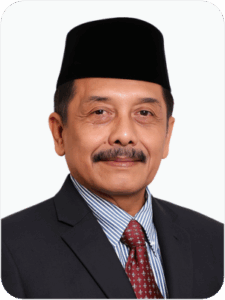
Prof. Dr. I Dewa Gede Palguna, S.H., M.Hum.
(Universitas Udayana, Indonesia)
Speakers

Prof. Dr. Ni’matul Huda, S.H., M.Hum.
(UII, Indonesia)

Prof. Dr. Ildiko Bartha
(University of Debrecen, Hungary)

Assoc. Prof. Dr. Kabiru Adamu
(Bayero University, Nigeria)

Prof. Dr. Ida Madieha Binti Abdul Ghani Azmi
(IIUM, Malaysia)
Participants and Presenters
- The International Student Colloquium is open to the public (lecturers and students) from the Faculty of Law UII and other university partners.
- Law students from any university may participate in the International Students Colloquium’s 2025 Call for Paper.
- All topics related to any area of law are welcome. (Please see detailed information in the Guideline Book for the proceeding manuscript). The selected papers will be presented at the International Students’ Colloquium 2025 and given several awards: Best Paper, 2nd Best Paper, and 3rd Best Paper. For presentation: 1st Best Presenter, 2nd Best Presenter, and 3rd Best Presenter. For Participant: Best Participant and 2nd Best Participant.
- Presenter from UII both students and lecturers are free from any charges, however presenters outside UII should pay IDR 400.000.
All payments should be made to:
Beneficiary Name : Fakultas Hukum UII Beneficiary Bank : Bank Syariah Indonesia (BSI) Account Number : 4444 33 2283
Swift Code : BSMDIDJA
Amount : Presenters non-UII USD 25 / IDR 400.000 Participants non-UII USD 10/ IDR 150.000
Timeline
Submission of Abstract : 15 November 2025
Participants Registration Deadline : 15 November 2025
Selected Abstracts Announcement : 20 November 2025
Paper Submission : 25 November 2025
Presentation : 1 December 2025
Announcement of Publication : January 2026
Links
(for Author(s) and Participants)
More Information
Office:
Faculty of Law Universitas Islam Indonesia
Jalan Kaliurang KM 14,5 Sleman, Yogyakarta
- M Farchan Juliansyah (+62 81235649059)
- Kamiliya Rokhmawati (+62 88212569384)