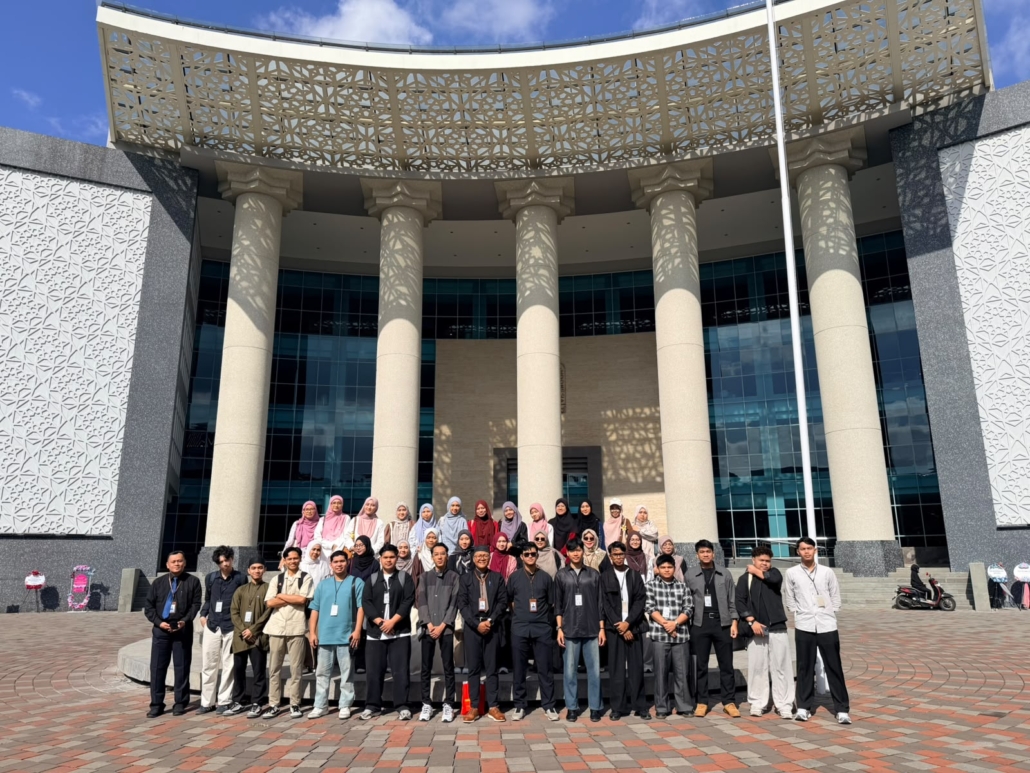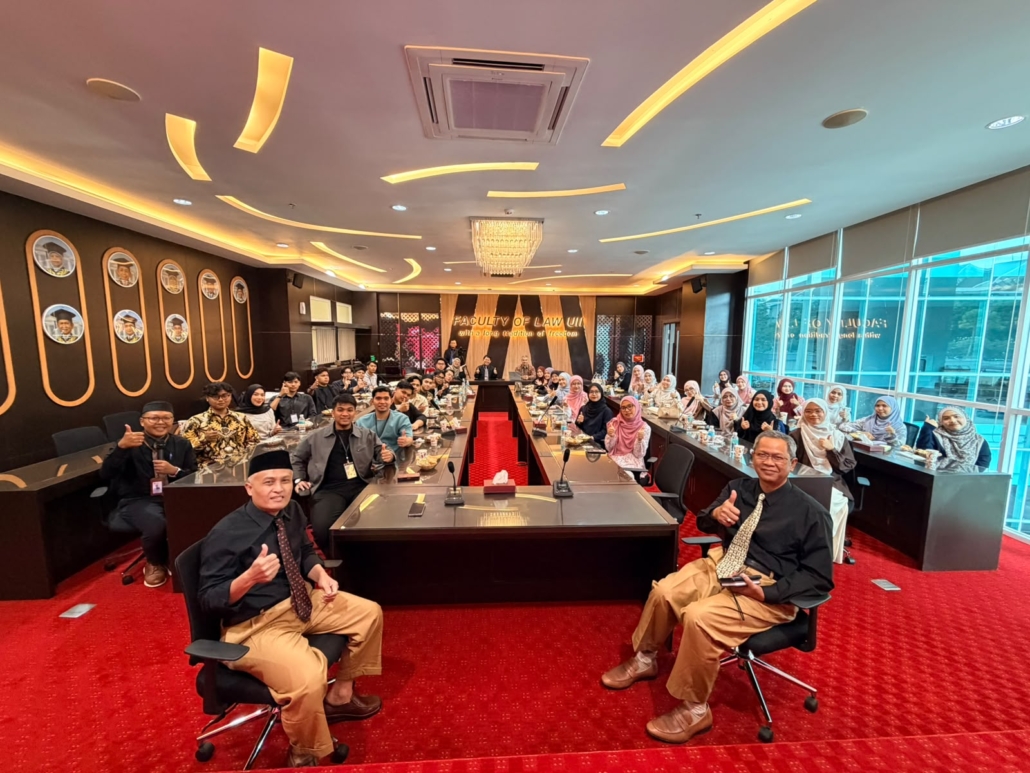


YOGYAKARTA – The Department of Criminal Law, Faculty of Law, Universitas Islam Indonesia (FH UII), in collaboration with the Indonesian Criminal Law Lecturers Association (DIHPA), successfully organized a National Seminar and Call for Papers on Wednesday, September 30, 2026. Carrying the theme “The Direction of Indonesia’s Criminal Procedure Code Reform: Developments and Challenges,” the event highlighted the paradigm shift in the criminal justice system following the enactment of the new Criminal Procedure Code (KUHAP).
In response to the passage of the new KUHAP, the Dean of FH UII, Drs. Agus Trianta, M.A., M.H., Ph.D., emphasized in his opening remarks the critical role of this academic forum in safeguarding legal implementation in the field. He addressed the challenge of “legal obesity” in Indonesia, where the state is highly productive in drafting new legislation but often remains vulnerable at the enforcement level.
“Justice is often accessible only to those with adequate resources. Therefore, through this seminar and criminal law reform, we hope attending students and academics can offer creative ideas and tangible contributions toward improving our future law enforcement,” he stated.
Echoing this sentiment, the General Chairperson of DIHPA, Dr. M. Sholehuddin, S.H., M.H., reaffirmed DIHPA’s commitment as a platform to continuously elevate the quality of criminal law expertise in Indonesia. He noted that no piece of legislation is perfect—including the new KUHAP—making constructive critique essential.
“Knowledge is universal and must always be critically discussed. Through DIHPA, we encourage lecturers and academics not to stop at writing papers, but to remain productive in producing comprehensive literature and scholarly books for the refinement of national criminal law,” Dr. Sholehuddin affirmed.
The national seminar was eloquently moderated by FH UII Lecturer Wahyu Priyanka Nata Permana, S.H., M.H., featuring prominent figures and criminal law experts who provided comprehensive insights into the new face of Indonesia’s criminal justice system.
Delivering the Keynote Speech, the Vice Minister of Law of the Republic of Indonesia, Prof. Dr. Edward Omar Sharif Hiariej, S.H., M.Hum., highlighted a fundamental shift in the new KUHAP from a crime control model to a due process model. He outlined several primary points of the reform:
- First, the new KUHAP seeks to balance broad law enforcement authority with detailed protections for Human Rights (HAM) to prevent arbitrary state action against individuals.
- Second, it provides specific human rights protections for vulnerable groups, including women, children, persons with disabilities, the sick, and pregnant women.
- Third, it strengthens Restorative Justice mechanisms and significantly expands the scope of pre-trial hearings (praperadilan) to cover nine coercive measures, now including wiretapping, asset freezing, and travel bans.
- Fourth, it introduces an IT-Based Criminal Justice System integrating data across the Indonesian National Police, the Attorney General’s Office, and the Supreme Court to ensure transparency and accountability.
The presentation session continued with Dr. Azmi Syahputra, S.H., M.H. (Trisakti University), who delivered a presentation titled “Penetrating the Gates of Justice: Roadmap for Victims’ Rights in the New KUHAP.” He highlighted how the position of victims has transformed under the new code: victims are no longer mere objects or evidentiary tools, but legal subjects whose voices carry significant weight. He further explained that the new KUHAP grants victims 25 absolute rights, along with 5 additional rights if the victim is a woman (totaling 30 rights), shielding them from intimidation as well as civil or criminal liability when acting in good faith.
Meanwhile, Dr. Dinar Kripsiaji, S.H., M.H. (Head of the Sleman District Prosecutor’s Office) presented on “Reforms in Investigation and Prosecution, Restorative Justice Mechanisms, Plea Bargaining, and Deferred Prosecution Agreement in the 2025 KUHAP.” His presentation focused on progressive case-handling instruments, such as the Restorative Justice Mechanism (Mekanisme Keadilan Restoratif / MKR), which is now accommodated across stages from investigation to trial, contingent upon victim forgiveness and restitution. He also discussed the introduction of Plea Bargaining (PB)—a guilty plea mechanism allowing defendants a summary trial with maximum penalty reductions up to two-thirds—and the Deferred Prosecution Agreement (DPA), which focuses on corporate entities to ensure governance reform and financial restitution without requiring corporate officer imprisonment. All new mechanisms must culminate in judicial determination and supervision to prevent abuse of power.
Serving as the final speaker, Dr. Muhammad Arif Setiawan, S.H., M.H. (Lecturer at FH UII) presented “The Urgency of Strengthening Judicial Scrutiny as a Crucial Instrument for Law Enforcement Oversight at the Preliminary Examination Stage.” He shared critical notes from an academic perspective:
- First, criminal procedural law inherently exists to control the authority of law enforcement officers to safeguard individual rights, not merely to control offenders.
- Second, although the pre-trial scope in the new KUHAP has been expanded to include suspect designations and expanded coercive measures, judicial scrutiny still faces challenges within judicial legal culture. He criticized the practice of pre-trial judges who frequently examine only formal administrative compliance without scrutinizing the relevance and substantive validity of evidence or the investigation process itself.
Enthusiasm for the Call for Papers
Beyond the national seminar, the event series featured a Call for Papers (CFP) agenda that met with remarkable enthusiasm. The CFP was attended by 45 participants from diverse backgrounds, including undergraduate and postgraduate students, academics, and legal practitioners from various universities across Indonesia, who presented their research across three discussion chambers.


At the conclusion of the event, the committee presented Best Presenter awards to three participants across the respective chambers for their outstanding research and presentations:
- Chamber 1: Anang Fajri Perdana (Universitas Islam Indonesia) – Paper Title: “Paradigm Transformation of Corruption Asset Forfeiture from Conviction-Based to Non-Conviction-Based”
- Chamber 2: Muhammad Galuh Pamungkas Wahyu Ramadhan, Kholilur Rahman, & Billy Pahlevy Islamy (Universitas Airlangga) – Paper Title: “The Concept of Time Limits for Inquiry and Investigation in the Indonesian Criminal Justice Process”
- Chamber 3: Mochammad Djalil (University of Jember) – Paper Title: “Implementation of the e-Berpadu Application in Restorative Justice Mechanisms and the Reform of the Criminal Justice System”
The success of this event reinforces the commitment of the Department of Criminal Law at FH UII to remain at the forefront of legal reform while fostering cross-university intellectual exchange in Indonesia.