

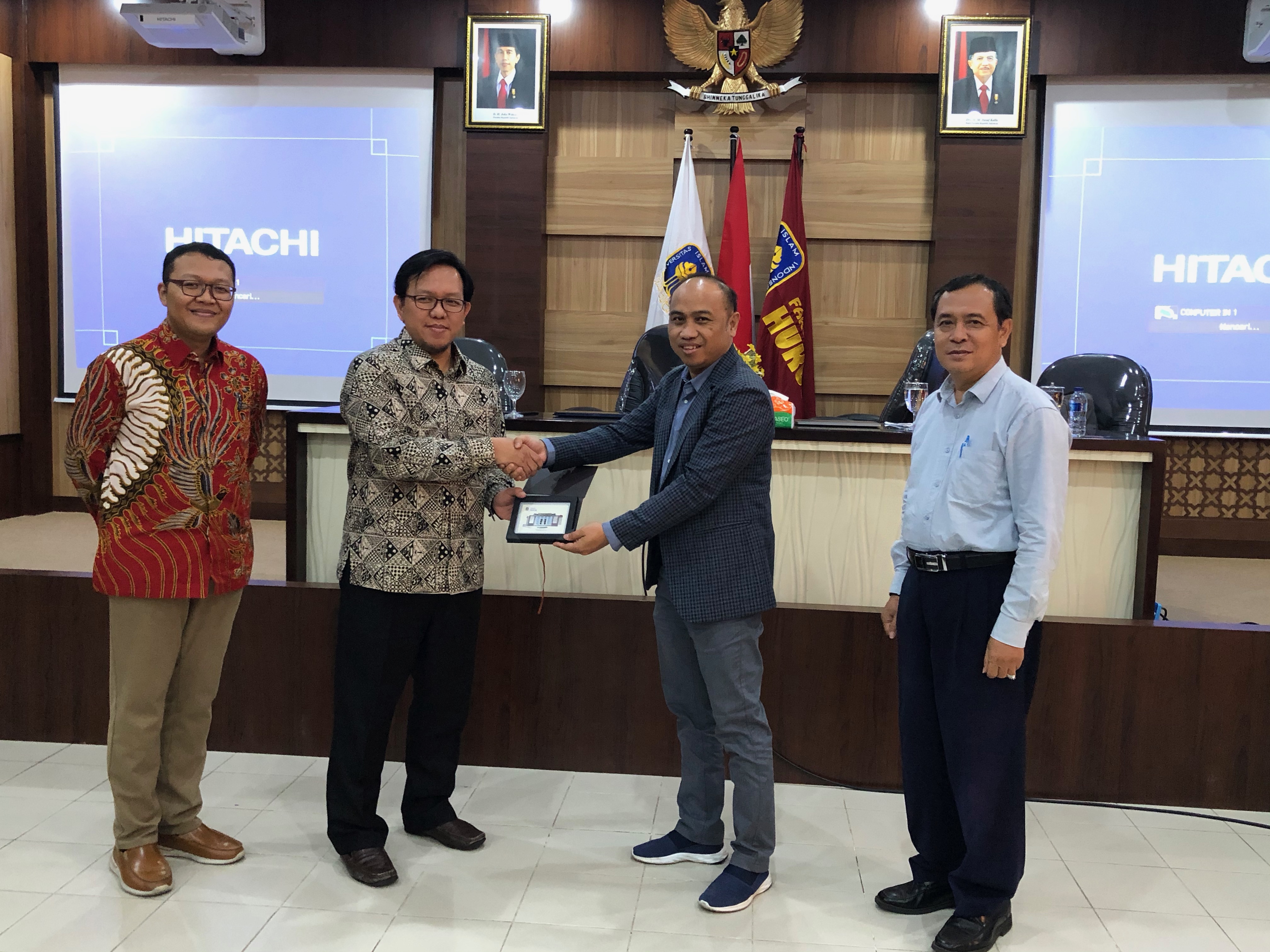
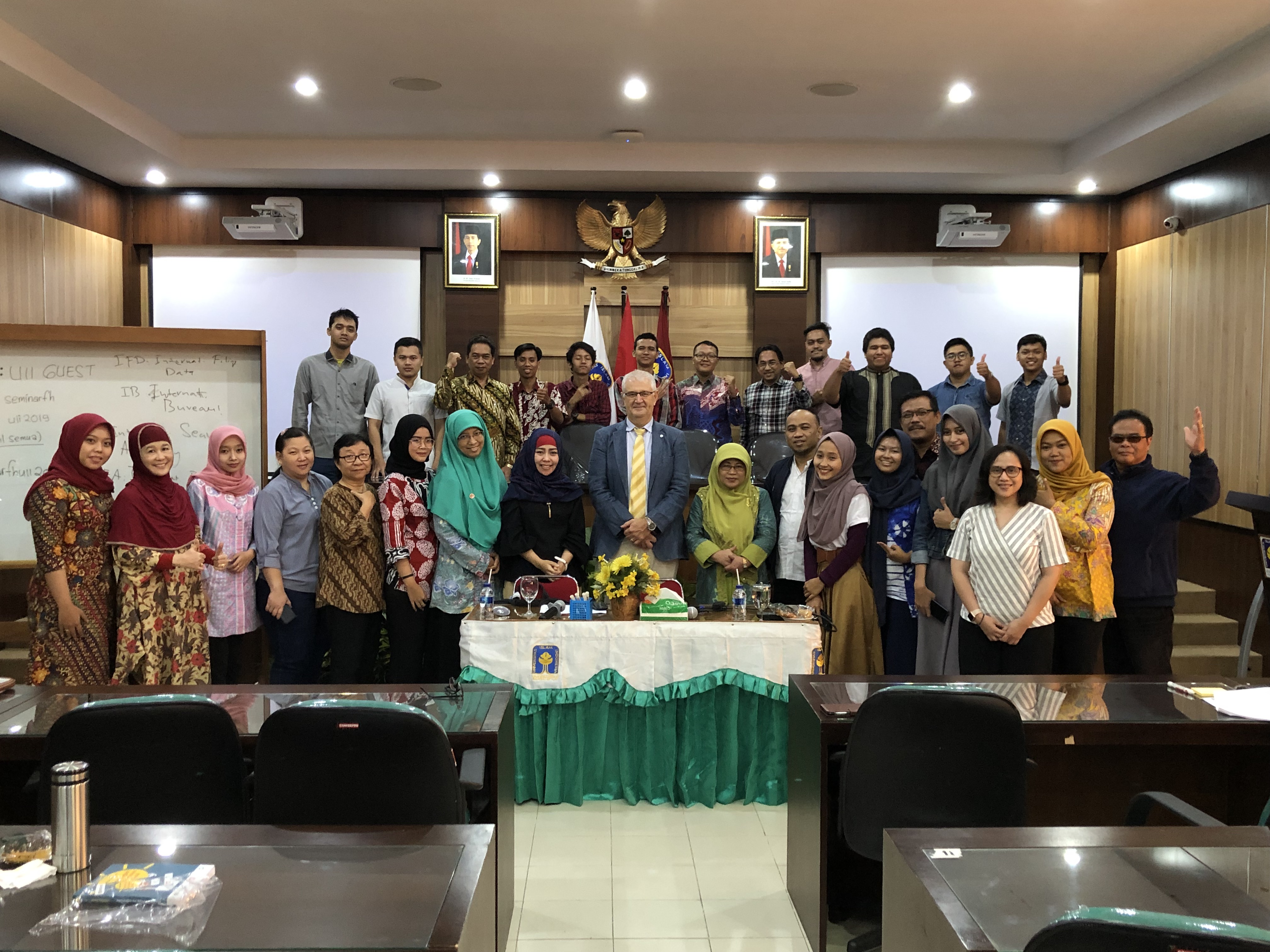
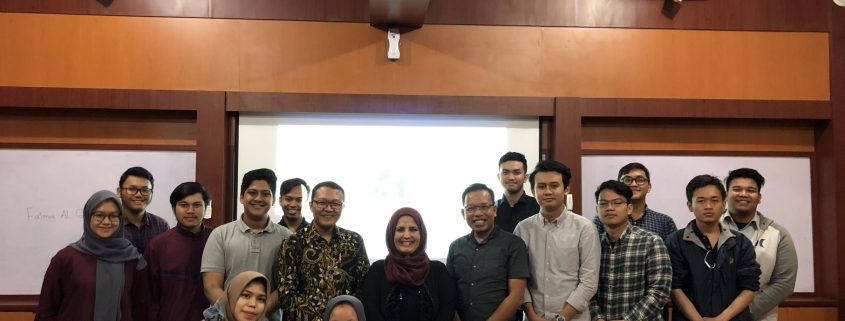
The Faculty of Law of the Islamic University of Indonesia (FH UII) held a general lecture entitled Cyberspace and the Legal Challenges: A Quest for Reform, on Monday (09/23/2019). The event was filled by Assoc. Prof. Dr. Sonny Zulhuda, an expert on cyber space and cyber law from Ahmad Ibrahim Kulliyyah of Laws International Islamic University Malaysia (AIKOLS IIUM). Sonny Zulhada conveyed his main ideas on the importance of reform in our paradigm towards cyber law and the existence of an education syllabus on cyber law.
This general lecture is a collaboration between Faculty of Law UII and AIKOLS IIUM. According to the Head of the Committee, Dodik Setiawan Nur Heriyanto S.H., M.H., L.LM., Ph.D., this event was a form Faculty of Law’s commitment to carry out regional and international cooperation according to the Asean University Networks Quality Assurance (AUN-QA) accreditation standards. The event was opened by the Head of Undergraduate Program of the Faculty of Law UII Study Program, Dr. Budi Agus Riswandi, S.H., M.Hum., Attended by dozens of participants.
Sonny Zulhada began his lecture by introducing the concept of cyber space to participants. According to him, technological development is impossible to block. Thus, the existence of cyber law is important to encourage development. At the end of 1990, cyber law had been drafted and even became law in European countries.
“The emergence of digital assets causes the basis for cyber law, causing the restructuring of the concept of digital assets,” said Sonny. According to him, although the law is always left behind, but it should not deny the reality of technological development. “This is important so that the law is not too far behind.”
Sonny showed a surprising thing in the middle of his lecture. He showed several pages that can be accessed to see the flow of cyber-attacks throughout the world in real time. One such page is Fireeye.com.According to him, the problem is not when and where a cyber-attack, but who is the culprit and how big is the impact. “That is the legal problem,” he said.
According to Sonny Zulhada, what is often forgotten is that at present, there is a development in the concept of assets that the community is not aware of. This development is the emergence of digital assets. This digital asset is one of them concerning a person’s personal data information. “The emergence of digital assets causes the basis for cyber law, causing the restructuring of the concept of digital assets,” he said.
The development of the industrial revolution 4.0 issue also became a driving force so that the concept of cyber law would soon be developed. According to him, do not rule out the possibility, in the future, artificial intelligence (AI) will replace human functions. This development has become an important legal issue to be examined immediately. Because, there have been several legal cases, such as unmanned cars developed by Ubercrashing into someone in the United States. “Can AI or the system be prosecuted in court?”, Asked Sonny Zulhada to participants.
According to Sonny, competition is the main cause of the development of cyber space and the reason for the importance of developing cyber law. In its development, technological progress must continue to bring positive values to society. “Innovators must not be free of values,” he stressed.
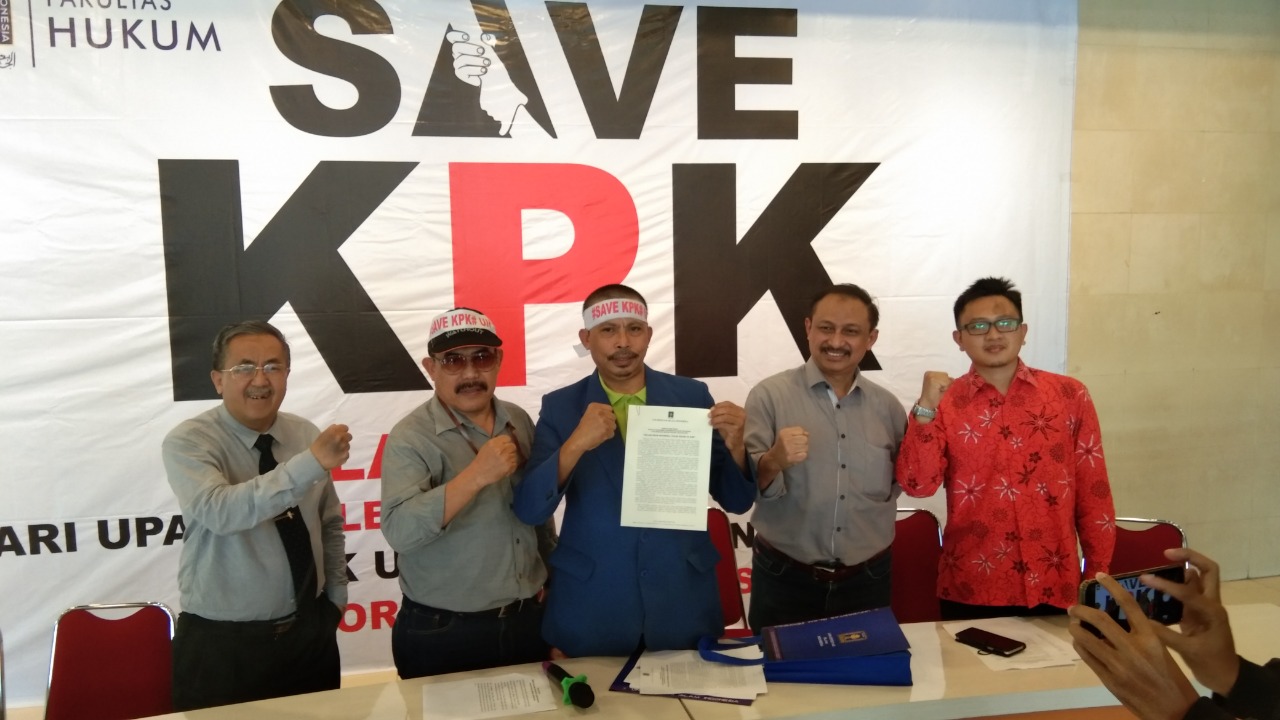
 The Dean of FH UII, Dr. Abdul Jamil, S.H., M.H., stated that UII was ready to declare a motion of no confidence in any party who supported changes to the KPK Law. UII’s tenet is rejects the revision of the KPK Law. We prepare a motion of no confidence in anyone who supports the weakening of the KPK, including the President “, he said.
 After the press conference, Abdul Jamil and other UII leaders joined the crowd of UII students to take demonstration at the Special Region of Yogyakarta’s Representative Council (DPRD DIY) and Malioboro Street. While giving speeches at the pickup truck, Abdul Jamil led the group to the Abu Bakar Ali Parking Park, which had been waiting for the combined mass of students from various universities in DIY.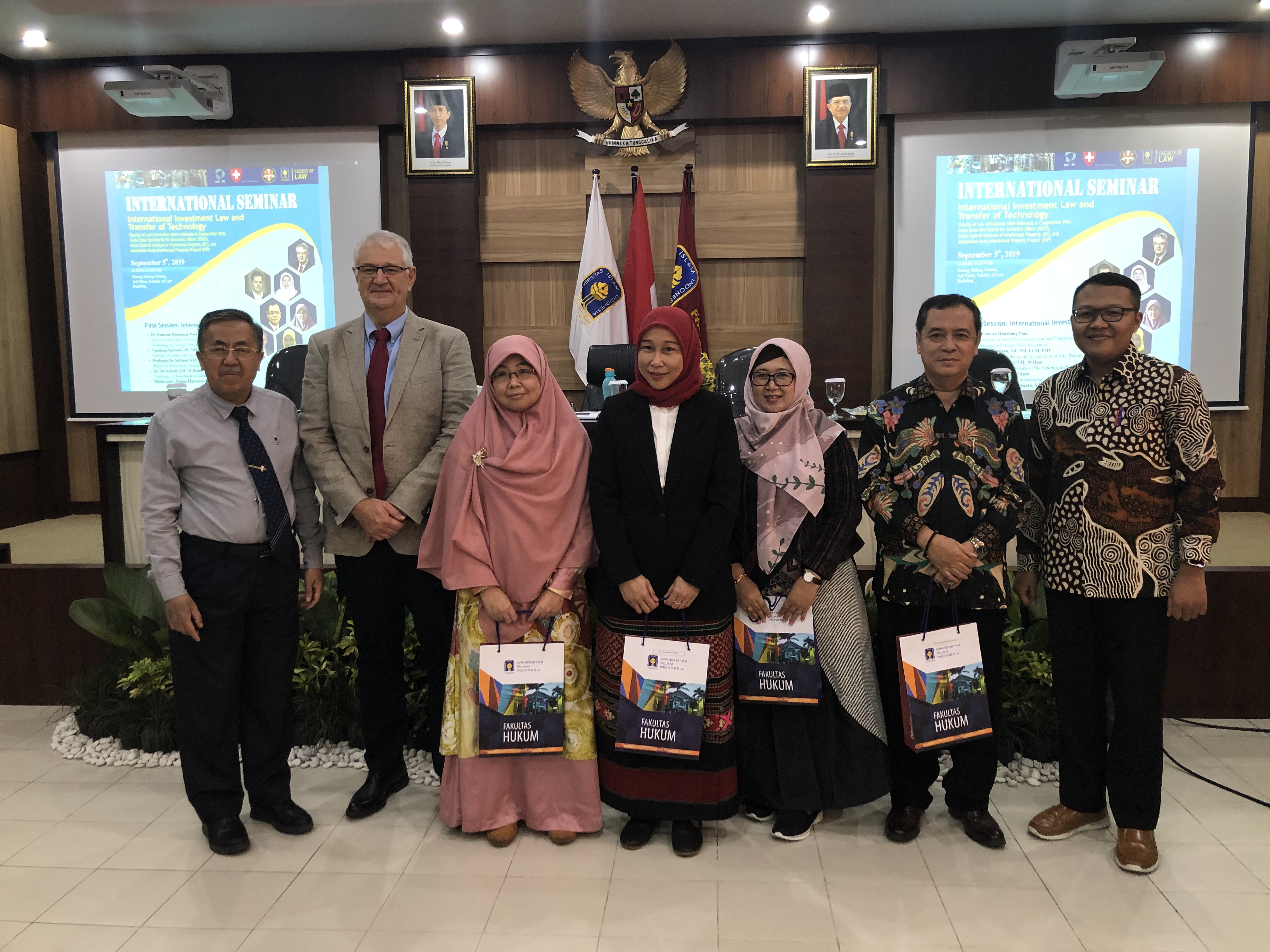
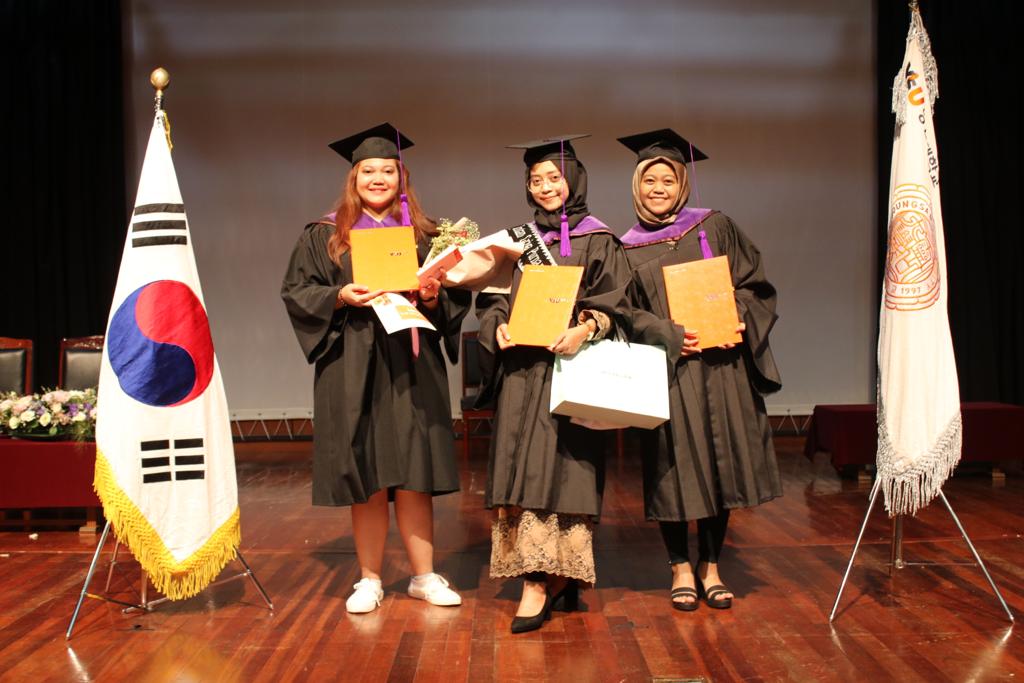
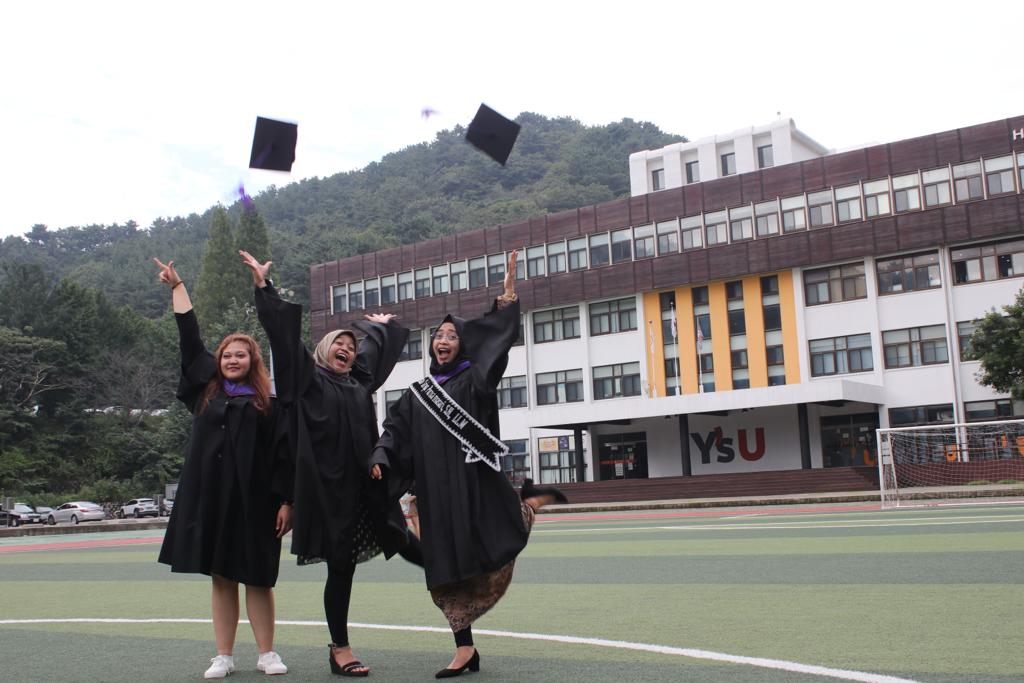 Among the graduates were foreign students from outside South Korea such as Indonesia, Vietnam, Cambodia, China and several other countries. Among the graduates from Indonesia, there were 3 double degree students in the jurisprudence of the Islamic University of Indonesia batch 3. The three UII students were Dhita Rahma Yanuari (Student Number: 17912009), Rahayu Saraswati Herlambang (Student Number: 17912024), and Intan Griya Purnamasari (Student Number: 17912009), successfully completed his studies at Youngsan University and earned an LLM degree with cum laude with a perfect GPA of 4.50.

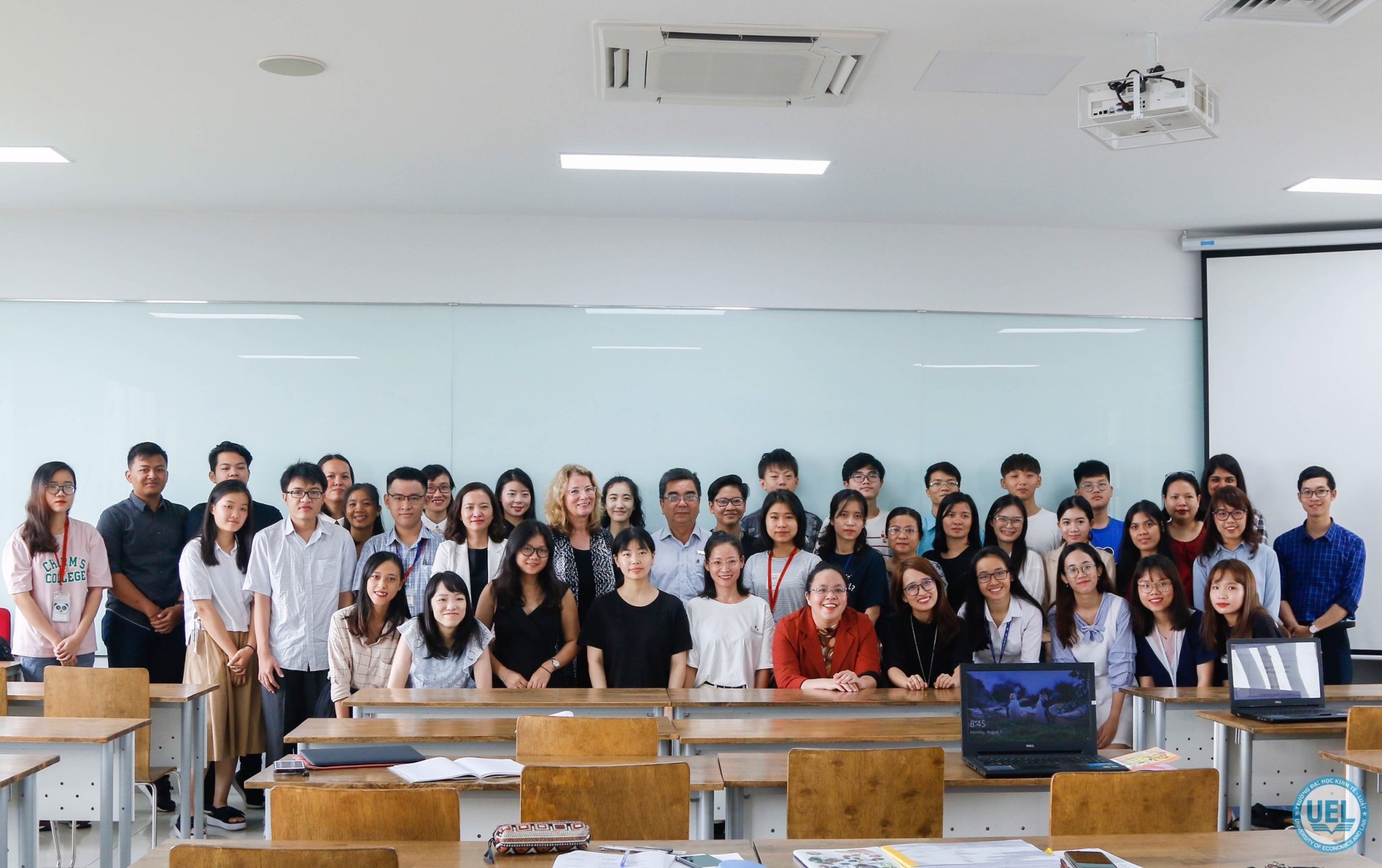
 In this Summer School program, Pradana Satya attended lectures for 2 weeks, in which there were 2 material distributions namely in the first week learning about Alternative Dispute Resolution in which there was learning about Negotiation, Mediation, Litigation and Arbitration. In this first week’s lecture, the lecturer was Professor Cynthia M. Adams. Professor Cynthia M. Adams is a lecturer at Indiana University’s Robert H. McKinney School of Law and also a practitioner in her field. Then, in the second week’s lecture material delivered by a Chief Justice at the Indiana Supreme Court at the United State of America namely Justice Steven H. David. In the second week, the material presented was regarding Contract Law in the American Law system and also the application of contracts in international business law. Every weekend, a final test will be held to test the ability of students and also one of the requirements to get a certificate of graduation from the Summer School so that every student must be able to pass the final test.


 People with disabilities (PwDs) and special needs have been disproportionately affected by the deterioration in living conditions in the Gaza Strip since March 2017. This situation is driven by a worsening energy crisis, which has resulted in outages of 18-20 hours a day, and an exacerbation of the salary crisis in the public sector, both of which are linked to an escalation in internal Palestinian divisions. The Palestinian Ministry of Social Development estimates that over 49,000 individuals in the Gaza Strip (or 2.4 per cent of the population) suffer from some type of disability, a third of them children. More than 1,100 of these people, including about 300 children, became disabled as a result of injuries incurred during the 2014 hostilities, including approximately 100 amputees.