
International Undergraduate Law Students Study Legislative Drafting at Batam City Government and DPRD
On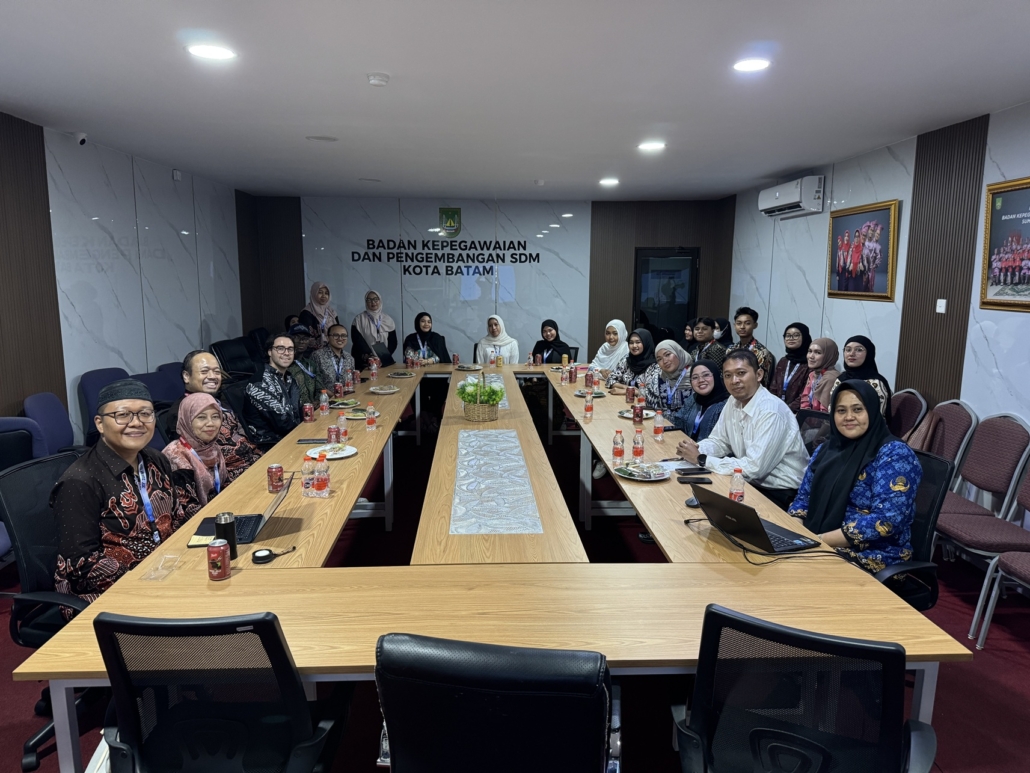 Monday, April 27, 2026, students of the International Program of the Undergraduate Law Study Program, Faculty of Law, Universitas Islam Indonesia, conducted a field-based learning activity focusing on the practical aspects of legislative drafting at the Legal Division of the Batam City Government and the Regional House of Representatives (DPRD) of Batam City. 15 students from the International Program attended this activity.
In his opening remarks, the Head of the Legal Division of Batam City Government, Mr. Joko Satrio Sasongko, S.H., expressed his appreciation to the Faculty of Law UII for facilitating direct learning opportunities within the Batam City Government. He emphasized that Batam possesses distinct characteristics compared to other regions, both in terms of resource composition, economic structure and its designation as an industrial city as well as a free trade zone. Historically, Batam was designed by B.J. Habibie as a miniature of Indonesia, with a strategic orientation toward investment development as an alternative within the regional economic landscape, particularly in relation to Singapore. Batam is projected as a region with sustainable economic development potential.
At the initial stage of the visit, the students received an introductory presentation from Ms. Nur Asmi, S.H., M.H., regarding the structure and characteristics of the Batam City Government. It was explained that Batam covers an area of approximately 1,080 km² and is supported by around five thousand civil servants. The Batam Municipal Minimum Wage (UMK) is the highest in the Riau Islands Province, with the United States as the largest export destination. The institutional structure of governance in Batam reflects a dualism between the Batam City Government and the Batam Development Authority (BP Batam), particularly in the administration of regional management. Administratively, both institutions operate under the direct coordination of the mayor of Batam, where the head of BP Batam concurrently serves ex officio as the mayor. In the legislative domain, Batam adheres to the same regulatory framework as other regions; however, there are distinctions in authority concerning regulatory formation to support the development of the Batam area.
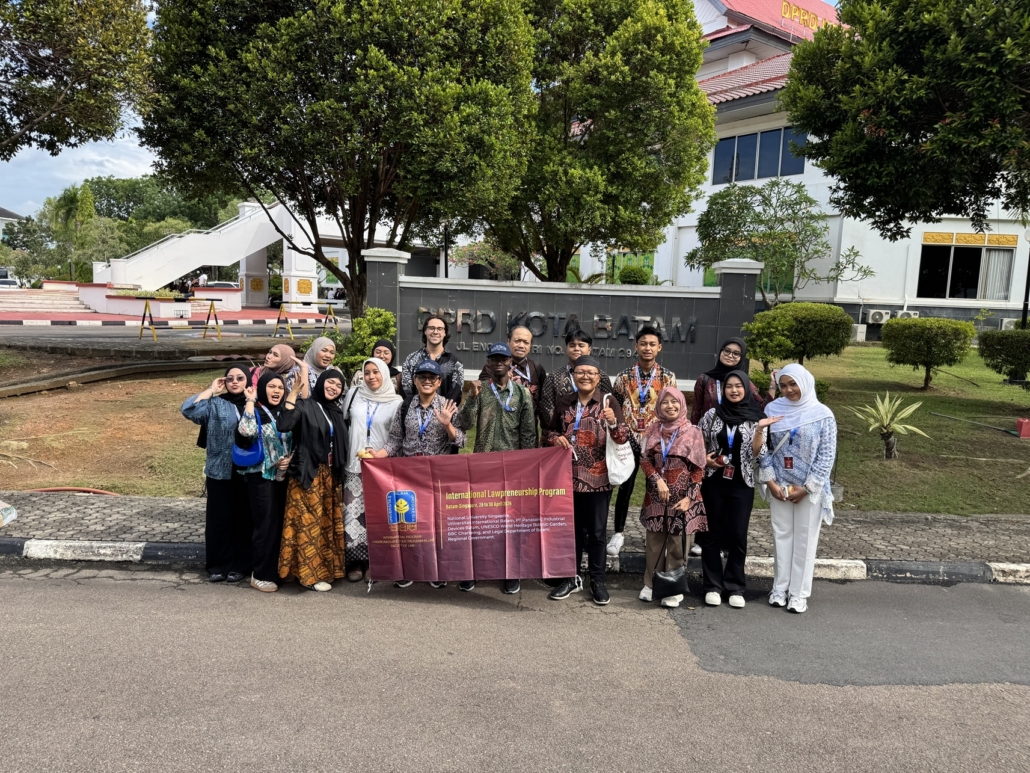
The team subsequently continued the field learning activity with a visit to the DPRD of Batam City. The Chairman of DPRD Batam City, Mr. Haji Muhammad Jamaludin, formally received the student delegation. In his presentation, he explained that Batam demonstrates unique normative and spatial characteristics, including regulatory zoning between industrial and residential areas. Geographically, Batam’s proximity to Singapore and its location along the strategic Malacca Strait position it as a critical node in international trade. This condition has driven Batam’s development as a transit city and as a strategic representation of Indonesia within the global context. Over the past two years, the central government has intensified its attention toward Batam, as evidenced by the issuance of four presidential regulations in early 2026 to reinforce Batam’s special status.
Furthermore, it was explained that the DPRD of Batam City performs three principal functions: legislative, budgeting, and supervisory (monitoring and evaluation). In executing its legislative function, there are notable differences compared to the national parliament (DPR RI), particularly because regional regulations (Peraturan Daerah) must align with and not contradict higher-level national legislation. Current policy orientation does not solely emphasize the quantity of regional regulations but also prioritizes regulatory effectiveness to avoid constraining the operational space of local government. The budgeting function is implemented through the formulation of the Regional Revenue and Expenditure Budget (APBD), its amendments, and periodic evaluations conducted every three months concerning governmental performance and financial reporting. In terms of supervision, the DPRD of Batam City also engages in cross-institutional coordination, including with the DPR RI, although certain authorities of the Batam Development Authority are directly coordinated with Commission VI of the DPR RI. Institutional synergy remains essential, facilitated through coordination with regional apparatuses and the Regional Leadership Coordination Forum (Forkopimda) to strengthen governance and promote Batam’s development.
During the visit, they also conveyed that the day coincided with the commemoration of Batam Authority Day. All elements of the Regional Leadership Forum, along with institutional leaders across Batam, held ceremonial observances in their respective institutions during the morning. The visit concluded with the presentation of tokens of appreciation and a guided tour of several facilities, including the Leadership Meeting Room and the Plenary Session Hall of the DPRD of Batam City.