Faculty of Law UII held the 8th International Student Colloquium (ISC)
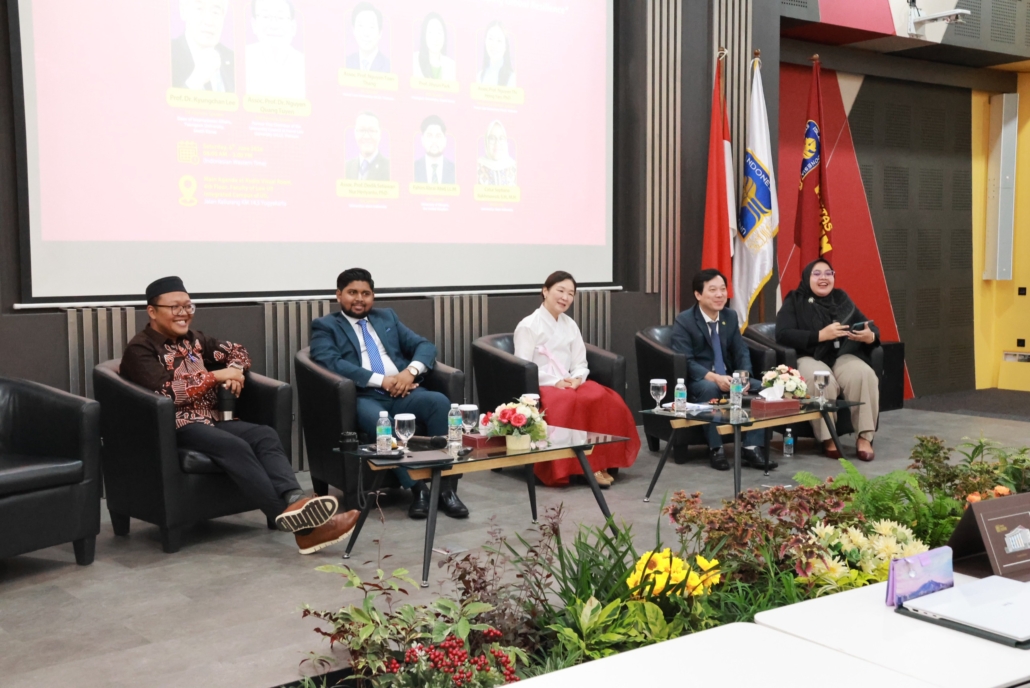
The 8th International Student Colloquium was held today at the Universitas Islam Indonesia Law Faculty, Yogyakarta, Indonesia. Speakers from Indonesia, Vietnam, and Scotland discussed the ever-important nexus of armed conflict, energy, and sustainable development.
The event began with remarks from the rector of the UII Faculty of Law. This was followed by a dance performance by the Sanggar Terpidana student group from the UII Faculty of Law. The conference was attended by approximately 150 students and researchers from various countries. The conference’s proceedings were published by the UII Faculty of Law.
The auditorium was filled with inquisitive students eager to learn about topical international issues. First, Professor Dr. Kyungchan, Dean of International Affairs of Youngsan University, South Korea, provided the historical context of maritime resilience in Indonesia and the world. Dr. Kyungchan also discussed the current energy paralysis resulting from the US-Iran conflict.
Associate Professor Dr. Nguyen Quang Tuyen (Hanoi Law University) warned of the challenges to the clean energy transition in times of geopolitical instability. He stated that governments must ensure the law does not reproduce injustice at the local level when acquiring land for solar and wind farms. Dr Nguyen Quang Tuyen asserted that the environment is always the first victim in global crises. This is evident with the current global regression to non-renewable energy as the Strait of Hormuz closures continue to disrupt.
Leading scholar on international law, Associate Professor Nguyen Toan Thang (Hanoi Law University), emphasized the urgency of wide-ranging reform to bolster legal resilience in the face of crises. The associate professor stated that modern warfare can reverse years of clean energy progress. The reform agenda includes changes to international humanitarian law, investment law, and the ASEAN Protocol.
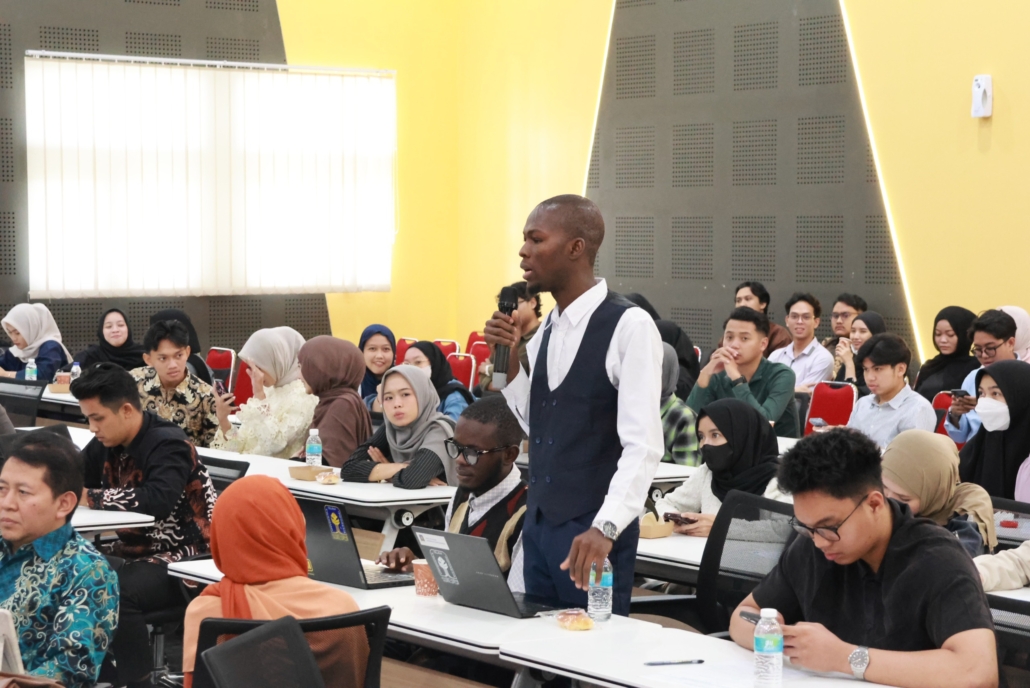
Students were taken aback when Professor Jihyun Park (Youngsan University) relayed that the United Nations official global war count is 130, 20 of which are in the most serious category. The professor asserted that there are significant grey areas in international humanitarian law, particularly with regard to cyber warfare. Reform must correct the increasingly inadequate legal framework—designed around 20th-century conflict parameters.
Associate Professor Dodik Setiawan Nur Heriyanto, PhD (Universitas Islam Indonesia), put forward a unique proposal for the establishment of virtual embassies. This would reduce costs significantly and offer a starting point for improved relationships where mutual trust is low. The associate professor acknowledged the challenges relating to cybersecurity but raised the 1979 US Embassy crisis in Tehran to illustrate that physical embassies are themselves not without risk.
The University of Glasgow’s Fahim Abrar Abid, LLM, introduced his research into proposed reform for sustainable development governance. Mr. Abid demanded that the Global South be an architect of reform as a major stakeholder. He also stated that human rights principles should be further entrenched in the legal framework, rather than mere ‘aesthetic language layered on top.’
While these global themes can be overwhelming and rather gloomy at times, there was a real sense of optimism and engagement in the room. Students were encouraged to accept their role as future leaders and promote important reform to improve legal resilience in times of crisis.