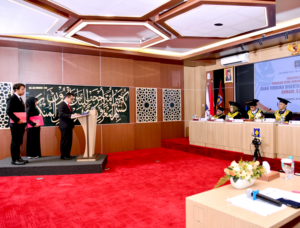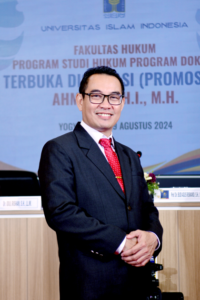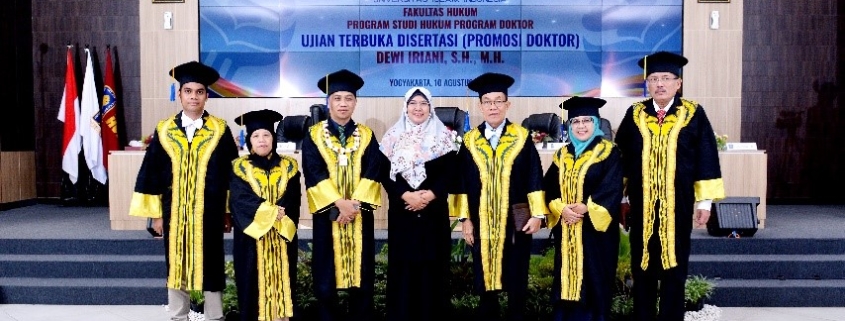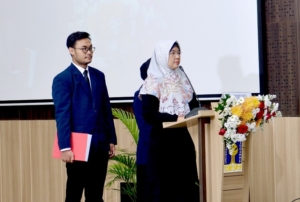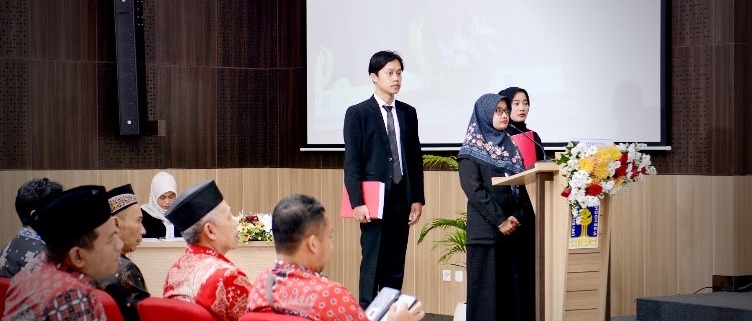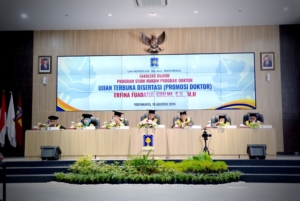
Yogyakarta, September 29, 2026 — The Faculty of Law, Universitas Islam Indonesia (FH UII), held a Public Dissertation Defense and Doctoral Promotion for Junaidi Arif on Saturday, September 26, 2026, in the 4th Floor Auditorium of FH UII. During the solemn open hearing, Junaidi Arif successfully defended his dissertation titled “A Hardship Clause Model in Commercial Contracts Providing Fairness for the Parties” before the board of examiners.

The candidate’s (promovendus) research was driven by the goal of formulating a hardship clause model in commercial contracts that delivers justice for all involved parties, responding directly to the absence of explicit statutory norms in Indonesian contract law. The researcher addressed three primary issues: first, the philosophical necessity of hardship clauses in Indonesian contract law; second, how Indonesian contract law currently fails to accommodate hardship according to international contract law standards; and third, the formulation of an equitable hardship clause model within Indonesian contract law.

Presenting his findings to the examiners, the doctoral candidate explained that from a philosophical standpoint, a hardship clause reflects the principles of justice and balance in contractual relationships by providing an adaptive mechanism to manage unpredictability. This clause allows the parties to renegotiate their obligations so that neither party is unfairly burdened. The lack of accommodation for hardship in Indonesian contract law aligned with international standards stems from Indonesia’s positive law relying on the Civil Code (KUHPerdata), a legacy of Dutch colonial law. This gap reflects a normative vacuum that creates legal uncertainty in practice whenever fundamental changes occur that make performance excessively onerous for one party. The hardship clause model developed by the International Trade Centre (ITC)—recognized as a best-practice model in international contract practice—can be adopted as a structural reference for commercial contracts, while still honoring the principle of party autonomy to determine whether to regulate the clause specifically or exclude it entirely.

The novelty of this research lies in the formulation of a hardship clause model into legislation as an explicit, comprehensive, and operational norm with a semi-mandatory structure. Under this framework, the state is obligated to provide basic norms and minimum protections, while the parties remain free to tailor the implementation mechanism to suit their specific contractual needs.

Junaidi Arif completed his dissertation under the guidance of Promoter Prof. Nandang Sutrisno, S.H., LL.M., M.Hum., Ph.D., and Co-Promoter Dodik Setiawan Nur Heriyanto, S.H., M.H., LL.M., Ph.D. The examination board for the public defense was chaired by Drs. Agus Triyanta, M.A., M.H., Ph.D., with board members including Prof. Dr. Agus Yudha Hernoko, S.H., M.H., Prof. Dr. Abdul Halim Barkatullah, S.Ag., S.H., M.Hum., Dr. Siti Anisah, S.H., M.Hum., and Dr. Inda Rahadiyan, S.H., LL.M.

YOGYAKARTA – The Faculty of Law, Universitas Islam Indonesia (FH UII) hosted a guest lecture under its Visiting Professor program titled “The Role of the Changing Judiciary in the Netherlands” on Wednesday, October 29, 2025. The event featured Prof. Dr. Albertjan Tollenaar, Professor of Local Law and Governance and Director of the Graduate School of Law at the University of Groningen, the Netherlands, as the keynote speaker. The session was opened with welcoming remarks by the Associate Dean for Religious, Student, and Alumni Affairs at FH UII, Drs. Agus Triyanta, M.A., M.H., Ph.D., and moderated by Sheila Noor Baity, S.H., LL.M., a lecturer in the Civil Law Department at FH UII.

In his presentation, Prof. Albertjan Tollenaar highlighted the transforming role of the judiciary, which is increasingly leveraged by civil society and non-governmental organizations (NGOs) to drive public policy changes, particularly regarding climate litigation. He analyzed several landmark cases in Europe, such as the pivotal Urgenda ruling in the Netherlands, and compared them with environmental law enforcement dynamics in Indonesia, including lawsuits over peatland fires in Kalimantan and air pollution in Jakarta.

Furthermore, the discussion delved into constitutional tensions between the judiciary and political branches within the framework of the separation of powers, the political question doctrine, and concerns over the rise of dicastocracy (rule by judges). In addition to lawsuits against governments, the lecture presented the emerging trend of civil lawsuits based on the duty of care against major carbon-emitting corporations such as Shell and RWE. The guest lecture concluded with an interactive Q&A session with postgraduate students on judicial independence and the enforcement effectiveness of court rulings in environmental matters.

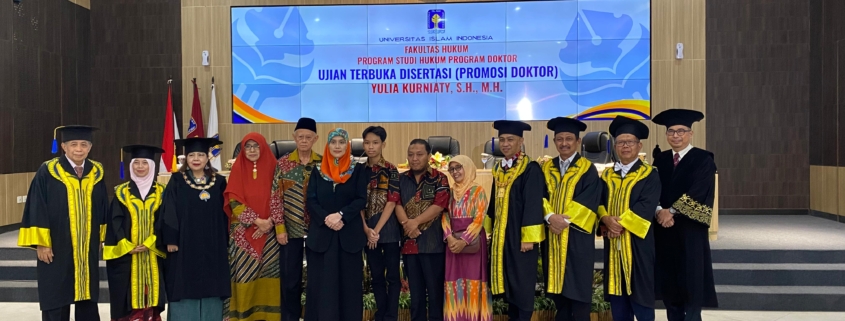
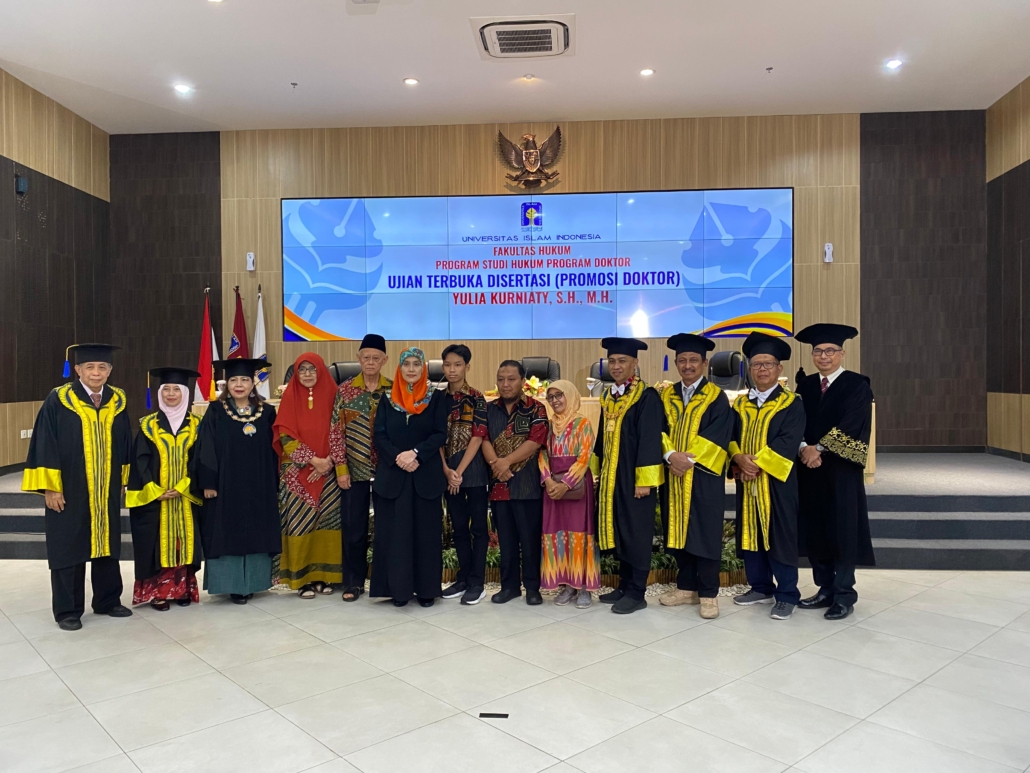
Kaliurang; Thursday, June 26, 2025, at 13.00 WIB, the public defense of the doctoral dissertation by Yulia Kurniaty, S.H., M.H. was held as part of the Doctoral Study Program in Law (PSHPD), Faculty of Law, Universitas Islam Indonesia. The defense took place in the 4th Floor Auditorium of the Faculty of Law, UII, chaired by Prof. Dr. Budi Agus Riswandi, S.H., M.Hum., with Prof. Dr. Rusli Muhammad, S.H., M.H. serving as the Promoter, and Dr. Aroma Elmina Martha, S.H., M.H. as the Co-Promoter. The examination committee also included Prof. Dr. Dra. Mg. Endang Sumiarni, S.H., M.Hum., Dr. Trisno Raharjo, S.H., M.Hum., Prof. Dr. M. Syamsudin, S.H., M.H., and Dr. M. Arif Setiawan, S.H., M.H.

At the beginning of the session, the promovenda delivered a 10-minute presentation of her dissertation entitled “An Ideal Model for Handling and Sanctioning Sexual Violence in Higher Education Institutions Based on Justice.” She explained that her research aims to analyze the current implementation of sexual violence handling in universities, especially considering that the enactment of Ministerial Regulation No. 30 of 2021 on the Prevention and Handling of Sexual Violence in Higher Education has not significantly reduced incidents. This situation led to the issuance of Ministerial Regulation No. 55 of 2024, which further regulates violence prevention and response in higher education institutions.

In her dissertation, the promovenda addressed three main research questions:

  1. How is sexual violence currently handled in higher education institutions?

  2. What are the similarities, differences, and challenges in the handling process?

  3. What is the ideal model for handling and sanctioning sexual violence in higher education?

The findings of her research are as follows:

  • First, the handling of sexual violence by task forces across the sampled universities varies greatly, depending on the experience, analytical abilities, and available resources of task force members, as well as the financial and institutional support.

  • Second, commonalities in handling include adherence to procedures outlined in the ministerial regulations and the use of social media as a reporting channel. Differences lie in operational techniques—for example, some task forces divide into investigation teams while others do not. There is also inconsistency in the presence of supporting units like health clinics, counseling centers, or legal aid services. Challenges include limited time due to the members’ primary duties as lecturers, students, and staff, as well as inadequate funding and facilities.

  • Third, the ideal model proposed is the Balanced Interest Integration Model, which prioritizes the interests of the reported party, the victim, the university, and the wider campus community. The ideal sanctioning model is based on five aspects: the nature of the violation, its impact, the victim’s losses, the perpetrator’s gain, and any aggravating or mitigating circumstances. These components form the basis for case analysis and sanction recommendations, ensuring that sanctions serve to restore victims, deter perpetrators, and prevent recurrence within the university.

During the defense, the promovenda responded convincingly to the examiners’ questions and successfully defended the arguments within her dissertation. As a result, Dr. Yulia Kurniaty, S.H., M.H. is now officially recognized as the 187th Doctor of Law through the structured learning system of the Doctoral Program in Law at the Faculty of Law, Universitas Islam Indonesia.

At the closing of the session, the Co-Promoter, Dr. Aroma Elmina Martha, S.H., M.H., extended her congratulations and expressed hopes that the knowledge gained would be beneficial for the nation and religion and bring blessings to others.

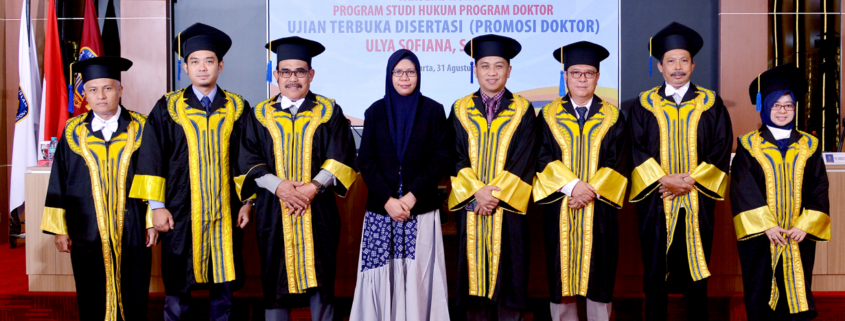
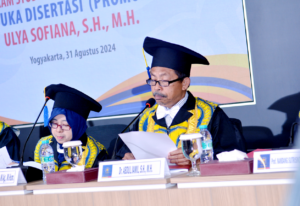
[KALIURANG]; The Ulya Sofiana’s Public Defense Examination was held by the Doctoral Study Program in Law on Saturday, August 31, at 09:30 WIB. The event was held in the Mini Auditorium Room, located on the 4th Floor of the Faculty of Law (FH), UII. The examination was led by Chief Examiners Prof. Dr. Budi Agus Riswandi, S.H., M.Hum., and Prof. Nandang Sutrisno, S.H., M.Hum., Ph.D., with Dr. Abdul Jamil, S.H., M.H., serving as the promotor team. The examination panel also included Dr. Sri Wahyuni, S.Ag., M.Ag., M.Hum., Dr. Drs. Rohidin, S.H., M.Ag., Dr. Umar Haris Sanjaya, S.H., M.H., and Drs. Agus Triyanta, M.A., M.H., Ph.D.

Ulya Sofiana presented her dissertation titled “Handling Interfaith Marriage Conflicts in the Merariq Tradition from the Perspective of Local Wisdom in Lombok.” The term merariq refers to a form of elopement practiced in Lombok, where a man takes a woman from her family, typically without prior consent from her parents or family members. If the woman agrees to the customary terms, she becomes his wife. One controversial aspect of merariq involves interfaith marriages, which often lead to conflicts within the Lombok community. These conflicts can exist as rejection of the marriage, denial of inheritance rights, and social rejection. Despite these issues, there is currently no clear regulation addressing interfaith marriages.

In her dissertation, Ulya Sofiana proposed a three-stage approach for managing interfaith marriage conflicts in Lombok:

  1. Pre-Conflict Handling: This stage focuses on prevention efforts. It involves religious, traditional, and family leaders to address potential issues before they escalate into conflicts. These leaders work together to provide guidance and set expectations regarding interfaith marriages.
  2. Conflict Handling: This stage addresses conflicts once they arise. It includes implementing sanctions related to interfaith marriages, such as rejection, expulsion from the community, and denial of inheritance rights.
  3. Post-Conflict Handling: This stage involves follow-up actions after sanctions have been applied. It includes the involvement of local governments and religious leaders to provide education and legal knowledge about interfaith marriages.

Finally, Ulya said that support from the local government is very important as a step forward in realizing laws that are in accordance with the values ​​in society, as well as reformulating Islamic marriage law to emphasize the status of interfaith marriages both formally and materially.

During the exam session, Ulya Sofiana was able to answer questions well and was able to defend the arguments in her dissertation. Dr. Ulya Sofiana, S.H., M.H. is now officially the 181st doctor of law who graduated from the doctoral study program in law, FH UII. At the end of the exam session, the Promoter (Prof. Prof. Nandang Sutrisno, S.H., M.Hum., Ph.D.) congratulated and give her some advice.

“The state has established the Election Law (Law 7/2017) to create a democratic and integrity-based state system. Unfortunately, not all elections can be conducted fairly and with integrity.”

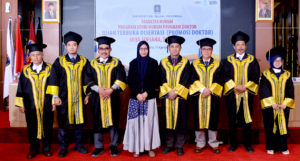
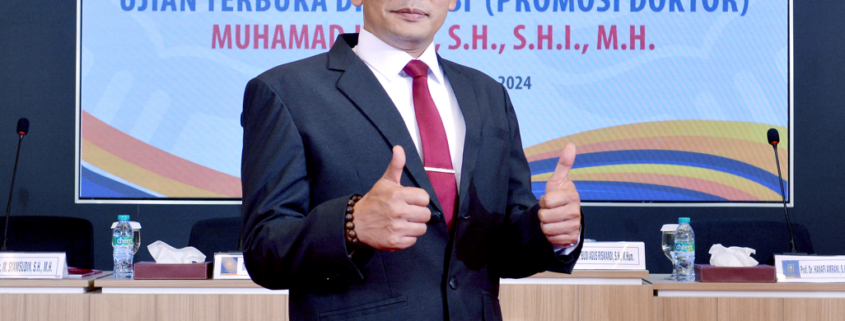
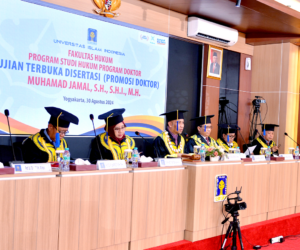
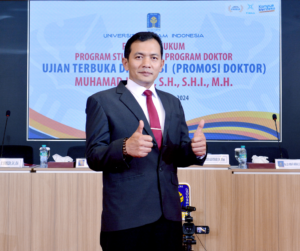
[KALIURANG]; On Friday (30/08) at 13:30 WIB, the Public Defense Examination for Doctoral Promotion was conducted by the Doctoral Study Program in Law (PSHPD) at the Faculty of Law (FH) Universitas Islam Indonesia (UII). Muhammad Jamal, S.H., S.H.I., M.H. was the doctoral candidate, presenting his dissertation titled “Imposition of Probationary Criminal Verdicts on Perpetrators of General Election Crimes in the Perspective of Progressive Law.” The examination took place in the Auditorium Room, 4th Floor, FH UII, and was chaired by Prof. Dr. Budi Agus Riswandi, S.H., M.Hum., the Dean of FH UII. The promotion committee consisted of Prof. Dr. Rusli Muhammad, S.H., M.H. as the promoter and Dr. Mahrus Ali, S.H., M.H. as the co-promoter. The examiners included Prof. Hanafi Amrani, S.H., LL.M., M.H., Ph.D., Dr. Sri Hastuti Puspitasari, S.H., M.H., Prof. Dr. M. Syamsudin, S.H., M.H., and Prof. Dr. Tongat, S.H., M.Hum., who joined online via Zoom.

During the examination, Muhammad Jamal pointed out that light penalties, such as probation, are often given to those who commit election, led to the increasing number of general election crimes. Based on this issue, Muhammad Jamal analyzed the judge’s considerations in imposing probation sanctions for election crimes and linked them to the spirit of progressive law.

Muhammad Jamal explained that the court decisions on election crimes he reviewed did not meet the four key principles of progressive law. For example:

  1. Law as a Dynamic Institution: The decisions didn’t meet this principle because judges only focused on whether the facts matched the legal article, without considering how the law might evolve.
  2. Law as a Teaching of Humanity and Justice: The decisions does not go through consideration/ratio decidendi so that it does not provide humanitarian aspects and did not offer insights into justice.
  3. Law as an Aspect of Regulations and Behavior: The decisions failed to connect the enforcement of fair elections with the core principles of people’s sovereignty and political essence, which is the third principle.
  4. Law as a Teaching of Liberation: The decisions were too narrow, focusing only on legal elements without exploring broader and does not go into depth or extend to other non-legal aspects.

In his dissertation, Muhammad Jamal proposed a construction for judges’ decisions on election. He suggested that future court decisions in these cases should embody five key qualities: court decisions must reflect a free paradigm in deciding election crime cases, court decisions must become dynamic laws, court decisions as teachings of humanity and justice and court decisions must contain aspects of regulations and behavior in a balanced manner. To realize these four qualities, three important elements are formulated, namely: (a) in deciding future cases, judges must take into account the sovereignty of the people and their rights, (b) the judge must emphasize in his legal considerations the degree of seriousness of the impact of election crimes on people’s sovereignty and voting rights in reasoning his legal considerations, (c) based on the theory of proportionality in punishment, the adoption of these considerations will lay a stronger basis for justification for judges to impose proportional criminal sanctions on perpetrators of election crimes. In this case, the judge can impose a probationary sentence as a sanction for election crimes whose impact is categorized as light. For election crimes whose impact is categorized as medium or serious, judges can use prison sentences and fines proportionally according to the impact caused.

During the exam session, the doctor candidate was able to answer questions well and was able to defend the arguments in his dissertation. Muhammad Jamal S.H., S.H.I., M.H. is now officially the 179th doctor of law who graduated from the doctoral study program in law, Faculty of Law, Universitas Islam Indonesia.

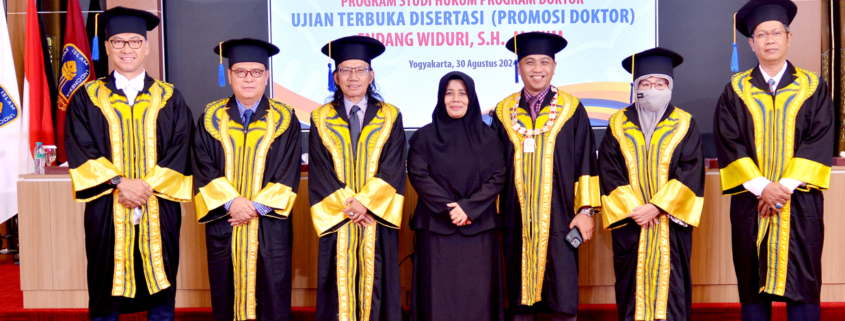
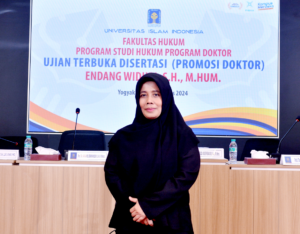
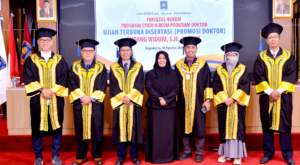
[KALIURANG]; On Friday, August 30th, at 16:00 WIB, the public defense examination of Endang Widuri was held by the Doctoral Study Program in Law (PSHPD), Faculty of Law (FH) at Universitas Islam Indonesia (UII). The examination took place in the Mini Auditorium Room on the 4th Floor of FH UII. The examiners included Prof. Dr. Budi Agus Riswandi, S.H., M.Hum. (Chairman), Prof. Dr. Sefriani, S.H., M.Hum. (Promoter), Mukmin Zakie, S.H., M.Hum., Ph.D. (Co-promoter), as well as Prof. Dr. Ridwan, S.H., M.Hum., Prof. Dr. Winahyu Erwiningsih, S.H., M.Hum., Prof. Nandang Sutrisno, S.H., LL.M., M.Hum., Ph.D., and Dr. Ariyanto, S.H., M.H., CN.

Endang presented her dissertation for approximately 10 minutes at the beginning of the exam session. She explained that her research aimed to evaluate the opportunities and challenges in accelerating land registration, as well as to explore models and impacts of collaboration between the government and the private sector through Corporate Social Responsibility (CSR) to support the Complete Systematic Land Registration (PTSL) program.

Endang’s dissertation research, titled “Government and Private Collaboration Through Optimization of Corporate Social Responsibility Funds in Complete Systematic Land Registration in Indonesia,” is a normative juridical study that employs statutory, conceptual, and historical approaches. Her research identified budget constraints and a shortage of human resources, particularly Licensed Cadastral Surveyors, as the primary challenges to accelerating land registration in Indonesia.

Furthermore, Endang explained that collaboration between the government and the private sector, especially through CSR, could accelerate the land registration process by increasing budget allocation and human resource capacity, as well as improving data quality through modern technology. “This collaboration model is expected to reduce disputes and enhance legal certainty and community welfare, particularly through the PTSL program,” she said.

Endang also added, “An evaluation and improvement recommendation of the legal framework, as well as for enhancing data quality, are proposed to support the success of the PTSL program.” Concluding her dissertation, Endang stated that to achieve the PTSL target by 2025, it is necessary to increase the budget, strengthen human resource capacity, and improve data quality with support from the private sector through CSR. This collaboration model will not only accelerate the process and increase the effectiveness of land registration but also contribute positively to addressing agrarian issues in Indonesia.

During the exam session, Endang Widuri was able to answer questions well and was able to defend the arguments in her dissertation. Dr. Endang Widuri, S.H., M.Hum. is now officially the 180th doctor of law graduate from the doctoral study program in law, FH UII. At the end of the exam session, the Co-Promoter (Mukmin Zakie, S.H., M.Hum., Ph.D.) congratulated her and advised Dr. Endang Widuri, S.H., M.Hum. to continue to spread knowledge and kindness with the new doctoral degree that has been achieved.

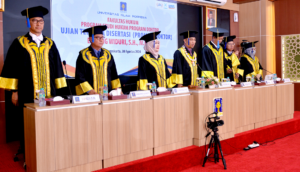
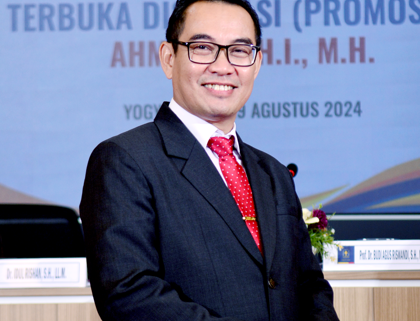
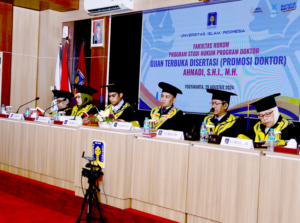
[KALIURANG]; Thursday (29/08), at 15:30 WIB, the Ahmadi’s public defense examination was held by the doctoral study program in law (PSHPD) at the Faculty of Law (FH), Universitas Islam Indonesia (UII). The examination was took place in the Mini Auditorium on the 4th floor of FH UII, with the examiners including: Prof. Dr. Budi Agus Riswandi, S.H., M.Hum. (head examiner), Prof. Dr. Ni’matul Huda, S.H., M.Hum. (promoter), Dr. Abdul Gaffar Karim, S.I.P., M.A. (co-promoter), Prof. Dr. Ridwan, S.H., M.Hum., Dr. Idul Rishan, S.H., LL.M., Dr. Sri Hastuti Puspitasari, S.H., M.H., and Dr. Drs. Muntoha, S.H., M.Ag.

Ahmadi presented his dissertation entitled “Legal Politics of Regional Election Regulations Post-Amendment of the 1945 Constitution of the Republic of Indonesia (UUD NRI 1945)” for approximately 10 minutes at the beginning of the exam session. He stated that the design of legal politics of regional election regulations in the UUD NRI 1945 faced various fundamental problems, such as the problem of interpretation and application of laws in legislation. This encouraged him to examine more deeply, comprehensively, and constructively about the dynamics of regional head election laws in Indonesia which occurred radically.

In his research, Ahmadi found that the legal policy regarding regional head elections in the UUD NRI 1945 is considered part of the regional government regime as outlined in Article 18, Paragraph (4) of the UUD NRI 1945. However, this has led to incorrect interpretations of the norm in Article 18 (4). Consequently, there have been inconsistencies in several areas, including: regulations at the legislative level and Constitutional Court decisions, the roles of actors in regional head elections, the management of regional head election implementations, the institutions responsible for organizing regional head elections, and the resolution of disputes related to regional head elections.

Furthermore, Ahmadi proposed that future regulations for regional head elections in Indonesia be conducted directly, transparently, and in stages. He also recommended reconstructing these regulations at the legislative level, establishing a special court for regional head elections, and implementing the elections in a direct, open, and staged manner involving political parties, the DPRD, and the KPU.

During the public defense examination session, Ahmadi answered questions well and was able to defend his dissertation arguments effectively.  Dr. Ahmadi, S.H.I., M.H. is now officially the 177th doctoral graduate from the doctoral study program in law at FH UII. At the end of the session, the Promoter congratulated him and wished that the knowledge gained would be beneficial and useful for religion and the nation. The Promoter also advised Dr. Ahmadi, S.H.I., M.H. to continue contributing and remain critical of developments in constitutional law concentration.


“The KPU as the Election Organizer must be able to implement the Election fairly and with integrity. Unfortunately, to realize an Election that is fair and with integrity has not been achieved.” (Dewi Iriani’s Dissertation)

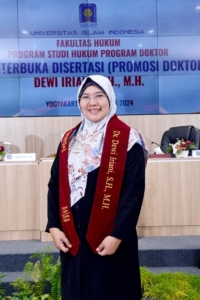
[KALIURANG]; Saturday (10/08), at 13.00 WIB, Dewi Iriani’s Public Defense Examination for Doctoral Promotion was held by the Doctoral Study Program in Law with a dissertation entitled “LEGAL POLITICS OF TERM LIMITATION IN KPU COMMISSIONERS FOR REALIZING A FAIR AND INTEGRITY GENERAL ELECTION.”

The public defense examination was held in the Auditorium Room, 4th Floor, FH UII, chaired by the Dean of FH UII, Prof. Dr. Budi Agus Riswandi, S.H., M.Hum., with promoter Prof. Dr. Muhammad Fauzan, S.H., M.H., co-promoter Dr. Sri Hastuti Puspitasari, S.H., M.H., with examiners: Prof. Dr. Achmad Sodiki, S.H., who joined online via zoom meeting, Dr. Janedjri M. Gaffar, S.H., M.Si., Prof. Dr. Ni’matul Huda, S.H., M.Hum., Dr. Idul Rishan, S.H., LL.M.
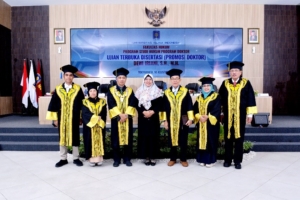
Dewi Iriani raised the issue of the KPU Commissioner term length (5 years) who can be re-elected in the next period without considering the track record of the KPU commissioner. There are at least three problem formulations raised in her dissertation: 1). What is the Position of the Commissioners of the KPU in the State System in Indonesia; 2) What is the Role of the Commissioners of the KPU in Realizing a General Election that is Fair and has Integrity; 3) What is the Direction of the Legal Political Construction of the KPU Term Limitation in Realizing a General Election that is Fair and Has Integrity in the Future.

Dewi Iriani said that the KPU is a state institution that is in the second tier. Although it is in the second tier institution, the KPU RI has an important role in organizing the Election which includes the role of forming the Provincial KPU and Regency/City KPU, preparing the stages of the Election, making regulations, implementing orderly administration, and together with the Provincial KPU and Regency/City KPU carries out elections according to predetermined stages. Structurally, it shows that the Indonesian KPU can decentralize certain authorities, can decentralize certain authorities, and this can be seen in the implementation of Regional Head Elections (Pilkada) where the implementation of Pilkada is carried out by the KPUD in all regional governments, except for the Special Region of Yogyakarta (DIY).

Furthermore, Dewi Iriani explained that the length of the KPU Commissioner term of office is more than 2 (two) periods or more than 10 (ten) years of office, some even up to 4 (four) periods or 20 (twenty) years of office, without considering the track record of the KPU Commissioner will potentially cause abuse of power by the commissioner. In addition, the length of office of KPU commissioners also raises the potential for violations committed by KPU Commissioners in the form of: administrative violations, criminal violations of the Election, and violations of the code, especially the principles of independence and honesty as regulated in DKPP Decision Number 135-Pke-Dkpp/Xii/2023, DKPP Decision Number 317-PKE-DPP/X/2019, DKPP Decision Number 123-PKE-DKPP/X/2020, Bawaslu Decision No.05/LP/PP.PL/ADM/Prov/04.00/V/2019, Decision Number: 35-PKE-DKPP/II/2023 and DKKP Decision Number 125-PKE-DKPP/IV/2021.

The legal political construction of limiting the term of office of Commissioners to realize elections with fairness and integrity in the future, namely by revising Article 10 point 9 of Law no. 7 of 2017 concerning General Elections which by reconstructing it becomes: “the term of office of a KPU Commissioner is only valid for 5 (five) years and can be re-elected for only 1 (one) term at the same level in the same region, taking into account the track record of the KPU Commissioner.” She said firmly.

During the exam session, the promovenda was able to answer questions well and was able to defend the arguments in her dissertation. Promovenda, Dewi Iriani, S.H., M.H. is now officially the 174th doctoral graduated from the doctoral study program in law study, FH UII. Co Promoter, Dr. Sri Hastuti Puspitasari gave a message that a doctoral degree is indeed something to be proud of, but do not be too proud of because it can give birth to arrogance. The new doctoral degree gives birth to new responsibilities for society, academics, the nation and the state. The supervisory team is proud and grateful for the graduation of Dr. Dewi Iriani, S.H., M.H accompanied by a sense of emotion from Dr. Dewi Iriani, S, H., M.H. reflects a deep sense of gratitude for the process she went through during the preparation of the dissertation.


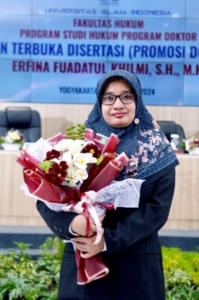
[KALIURANG]; Saturday (10/08), at 10.00 WIB, the Erfina Fuadatul Khlimi’s Public Defense Examination for Doctoral Promotion was held by the doctoral study program in law (PSHPD) Faculty of Law (FH) Universitas Islam Indonesia (UII) with a dissertation entitled “Reconceptualization of Content Material Regarding Interfaith Harmony in the Regional Regulation of East Java Province Number 8 of 2018 Concerning the Implementation of Tolerance in Community Life.”

Erfina Fuadatul Khilmi present that the East Java Provincial Tolerance Regulation was formed as an instrument that is expected to facilitate the provincial government in dialogue and reconciliation to prevent intolerant and discriminatory attitudes towards fundamental issues of East Java society (related to diversity of ethnicity, race, religion, class and socio-economic). However, the use of regional authority in the content of this Tolerance Regulation has caused excessive euphoria of regional autonomy regarding the maintenance of interfaith harmony.

The doctoral candidate continued, that the Article 1 section (5) of the East Java Provincial Tolerance Regulation defines tolerance as a willingness to recognize and respect the civil rights of the Community in accepting differences in religious, cultural, and social diversity as well as special conditions in community, national and state life. The term “special conditions” in the material content of the Regulation is full of the risk of being misunderstood because the benchmark used is the mainstreaming of individual rights as demanded within liberal boundaries, so that it is not limited by the values ​​of civilized tolerance in local community life, especially in East Java Province.

So it is important to reconceptualize the material content regarding religious harmony in the East Java Provincial Tolerance Regulation to realize civilized tolerance. There are at least two formulations of the problem raised by the doctoral candidate, namely: Why is the material content of the East Java Provincial Regulation Number 8 of 2018 concerning the Implementation of Tolerance in Community Life regarding the protection of religious harmony not in accordance with the laws and regulations above it; How is the reconceptualization of the content of religious harmony in the Regional Regulation of East Java Province Number 8 of 2018 concerning the Implementation of Tolerance in Community Life based on Pancasila.


The Public Defense Examination of Doctoral Promotion Dissertation on behalf of Erfina Fuadatul Khilmi was held in the Auditorium Room, 4th Floor, FH UII, chaired by the Dean of FH UII, Prof. Dr. Budi Agus Riswandi, S.H., M.Hum., with promoter Prof. Dr. Ni’matul Huda, S.H., M.Hum., co-promoter Dr. Drs. Rohidin, S.H., M.Ag.., with examiners: Prof. Dr. Drs. H. Makhrus, S.H., M.Hum., Dr. Janedjri M. Gaffar, S.H., M.Si., Dr. Drs. Muntoha, S.H., M.Ag., Dr. Sri Hastuti Puspitasari, S.H., M.H. During the exam session, the doctoral candidate was able to answer questions well and was able to defend the arguments in her dissertation. Dr. Erfina Fuadatul Khilmi, S.H., M.H. officially holds the 173rd doctoral degree who graduated from the doctoral study program in law, FH UII. The promoter, Prof. Dr. Ni’matul Huda S.H., M.Hum prayed that the new degree obtained would be a blessing for Dr. Erfina Fuadataul Khilmi, S.H., M.H. and prayed that she would be able to obtain a professors after this.

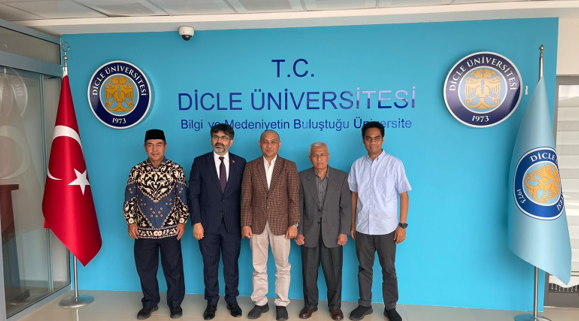
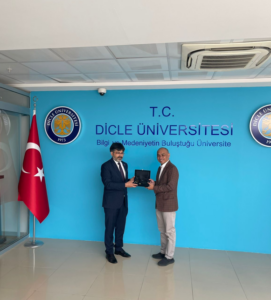
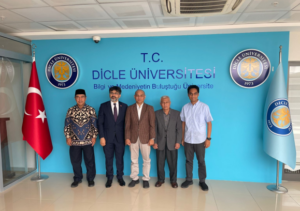
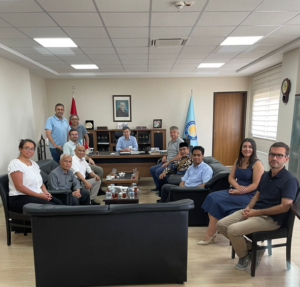
[KALIURANG]; On 15 July 2024, a delegation from the Law Faculty at the Islamic University of Indonesia (UII) based in Yogykarta, visited the Faculty of Law at Dicle University in Turkey. The delegation was led by the Dean of UII Faculty of Law, Professor Budi Agus Riswandi, S.H.M.Hum.  Other members of the UII delegation included: the Deputy Dean for Student Affairs, Religious Affairs and Alumni of the UII Faculty of Law Dr. Agus Triyanta, M.H., M.A., Ph.D, Head of the Notary Study Program Master, Dr. Nurjihad, S.H., M.H and Postgraduate Learning Coordinator Dr. Idul Rishan, S.H., LL.M.
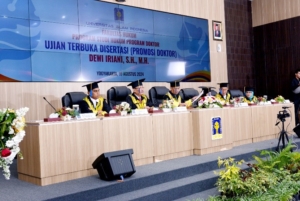
The delegation collaborated on key international partnership plans:

  1. finalising the implementation of the double degree program for the Law Master’s Program;
  2. preparing for the 1st Postgraduate International Conference on Law, Technology and Society;
  3. discussing options for credit transfers or double degree partnerships for the Master’s Program of Notary Studies; and
  4. seeking potential opportunities for research and publication collaboration.

According to the Dean, Professor Dr. Budi Agus Riswandi, S.H., M.Hum,  this visit was the second time a UII delegation had visited Dicle University to collaborate on degree partnerships and other tertiary programs. This shows UII Law Faculty’s commitment to establishing a strong partnership with the Law Faculty of Dicle University, Turkey.

UII received a warm welcome from the Chancellor of Dicle University Turkey, Prof. Dr. Mehmet Korkoc and his team from the International Affairs Office and Law Faculty of Dicle University, Turkey.